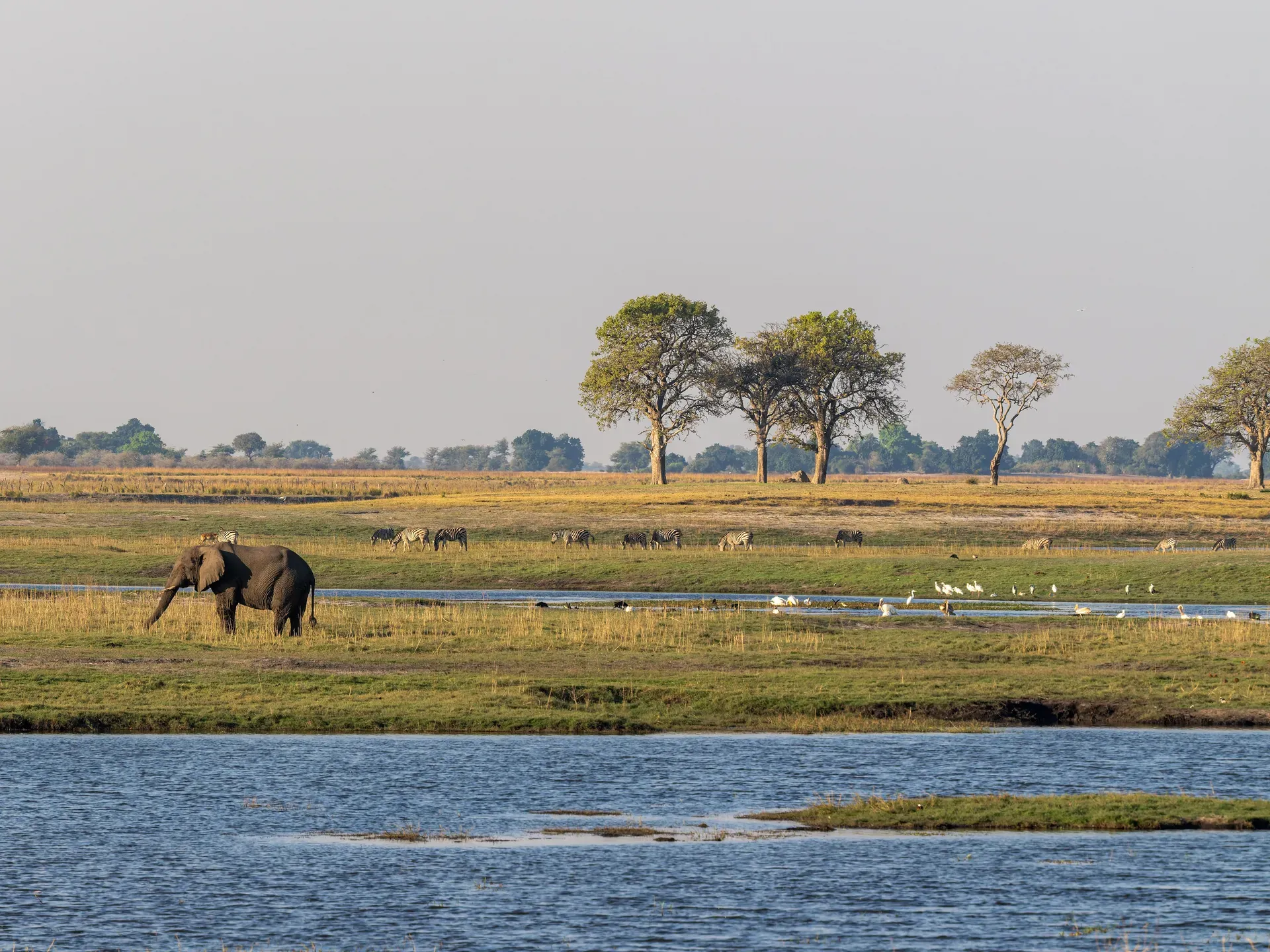
Victoria Falls town gives you the world's largest sheet of falling water and, safari-wise, little else. Chobe National Park, one border crossing and roughly 100 km away in Botswana, holds the densest elephant population on Earth. That pairing is why a Chobe day trip has become the standard add-on to a falls visit — and why it's worth surrendering a full day of your itinerary.
It's a long day, 13 to 14 hours door to door, with a border crossing in the middle. Knowing the mechanics before you commit makes the difference between a smooth safari and a rushed one. This guide covers the route and timings from both Victoria Falls town and Livingstone, real costs, the visa trap that catches single-entry holders, and what the wildlife actually looks like on an average day. For the bigger picture, our Chobe safari guide covers the park in depth.
Why Chobe Is the Best Day Trip From Victoria Falls
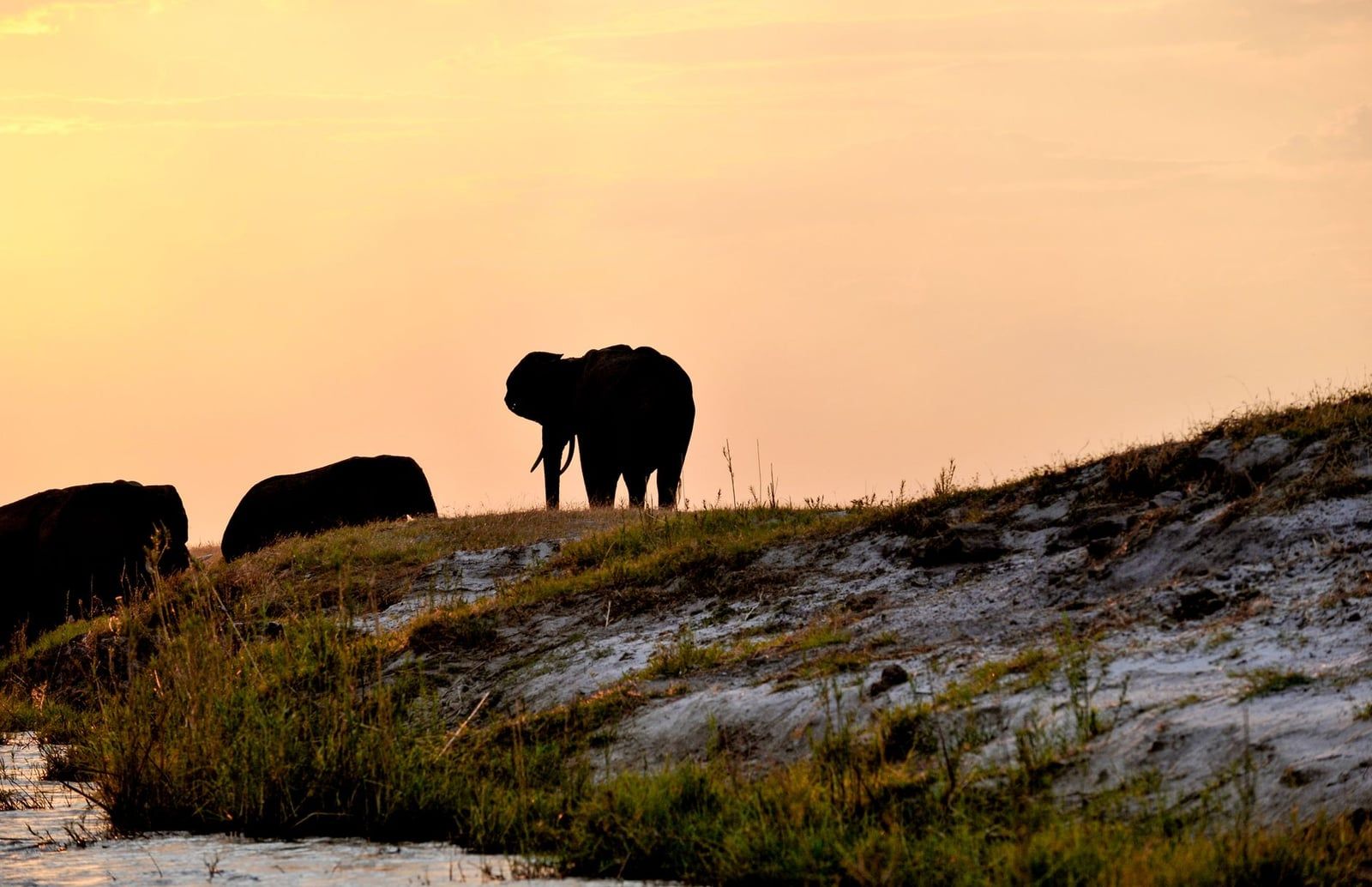
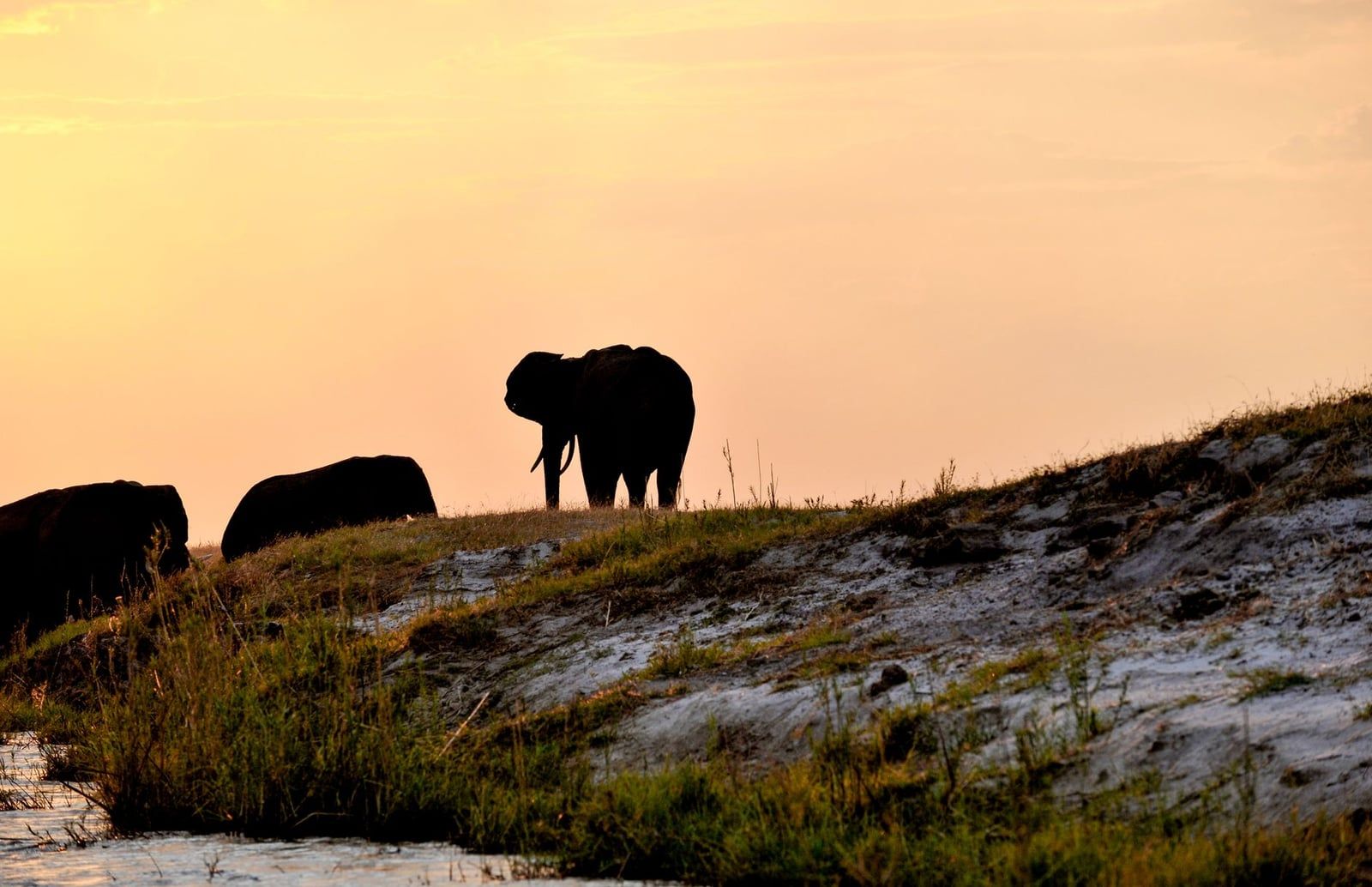
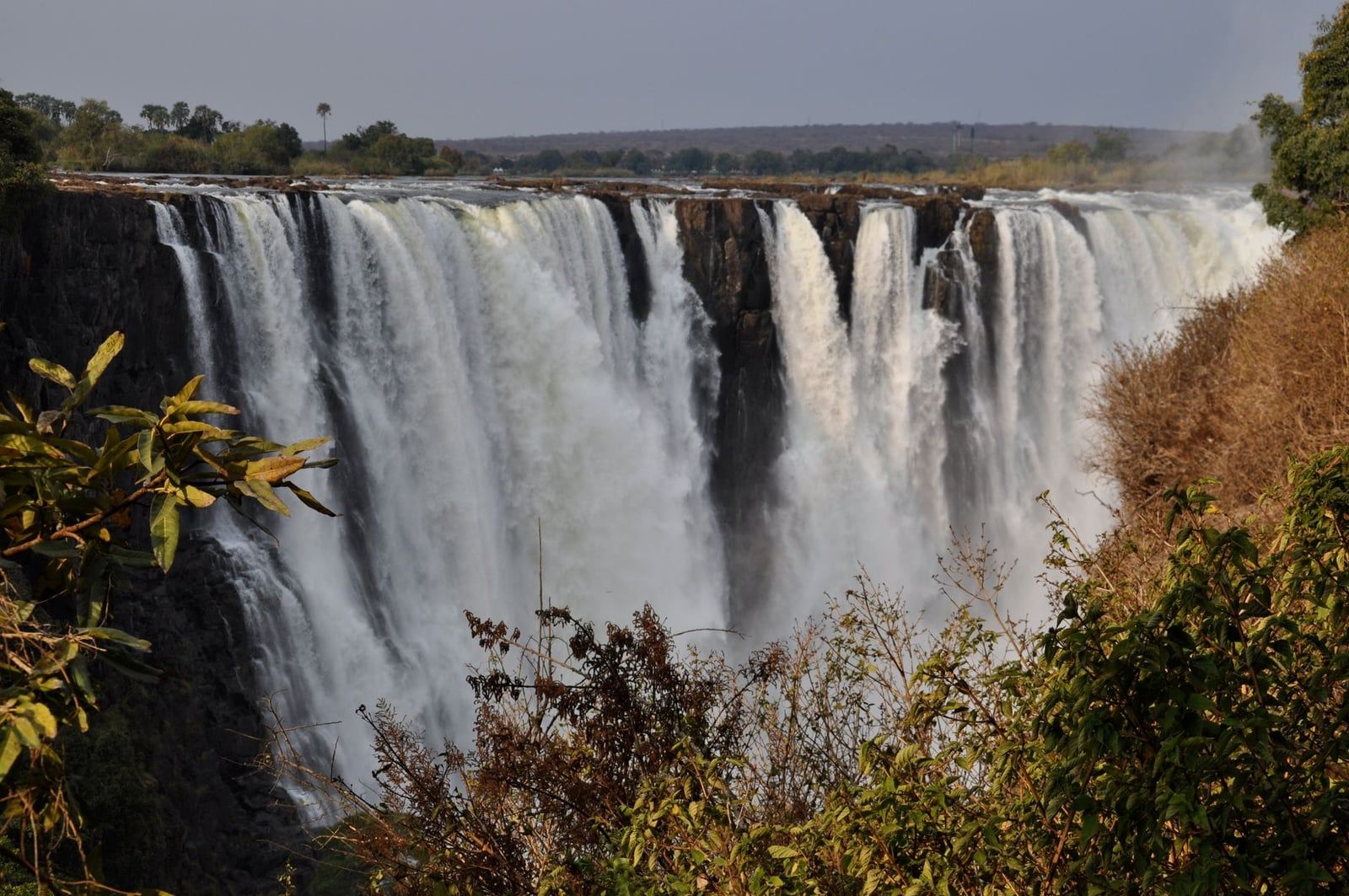
The parks within easy reach of Victoria Falls town can't deliver a proper safari. Chobe can. It's Botswana's first national park, 11,700 km² of the country's far north, and day trips don't attempt to cover it — they stick to the Chobe Riverfront, the strip along the river where wildlife concentrates on permanent water. You skip the vast interior and still get the park's densest game.
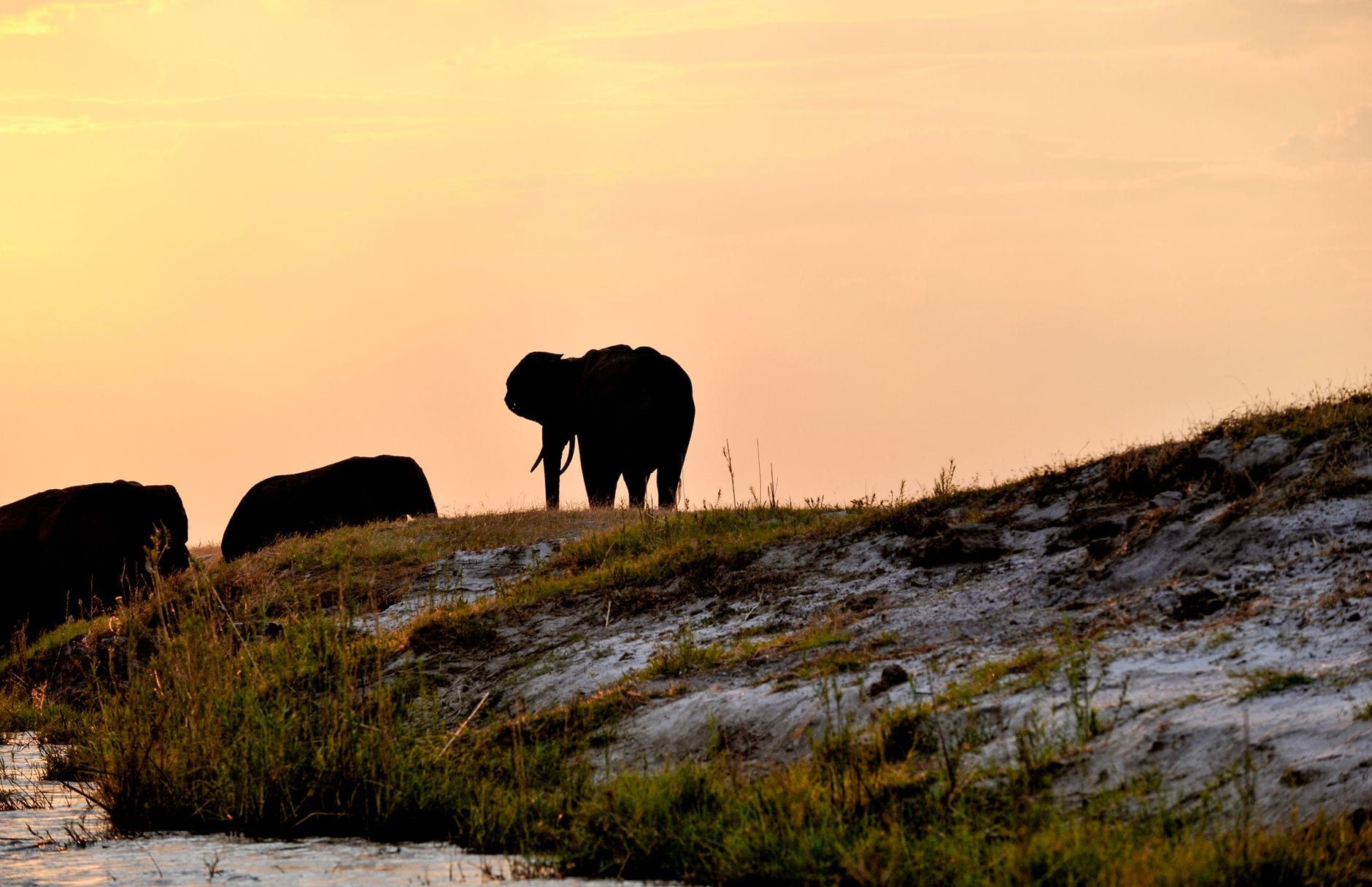
The elephant numbers you'll read online disagree, and here's why. Chobe itself carries an estimated 50,000–70,000 elephants, the densest concentration anywhere on Earth, while the 2022 KAZA Elephant Survey counted 131,909 across Botswana as a whole, Africa's largest national population. The herds cross freely into Namibia, Zimbabwe and Zambia, so the count on any given day swings. What holds steady: in the dry season, hundreds come down to the river to drink, and any trip that reaches the riverfront finds them.
Birders get 450+ recorded species, so even a quiet afternoon on the water turns up fish eagles, kingfishers and carmine bee-eaters. The honest framing for the whole day: elephants are near-certain, buffalo very likely, giraffe and zebra likely, and big cats a matter of luck.
How the Day Works: Route, Timings, and a Typical Itinerary
Every operator runs the same template: early pickup, road transfer to the border, morning activity, buffet lunch at a riverside lodge in Kasane, afternoon activity, then the whole thing in reverse back to your hotel. A sample timeline:
- 6:00–7:30 am — pickup at your Victoria Falls or Livingstone hotel
- 7:30–9:00 am — Kazungula border formalities (20–40 minutes each way)
- 9:00 am–12:00 pm — morning game drive or river cruise
- 12:30 pm — buffet lunch at a riverside lodge in Kasane
- 2:30–5:30 pm — second activity: the drive or the cruise
- Around 6:00–6:30 pm — drop-off back at your hotel
From Victoria Falls town it's about 80 km to the Kazungula border post and roughly 100 km all the way to Chobe — just over an hour's driving. From Livingstone the route differs: you cross the Kazungula Bridge over the Zambezi directly into Botswana, about 70 km from town. Kazungula is the quad-border area where Botswana, Zambia, Zimbabwe and Namibia meet, which is why this crossing serves both departure points.
One detail that surprises people: the company you book with in Victoria Falls doesn't run your safari. It transfers you to the border and hands you over to a Botswana ground operator, who runs the drive, lunch and cruise. Two companies, one day. Confirm the activity order, inclusions and pickup arrangements in writing before you pay — the handover is where details fall through.
Road transfer is the only realistic option for a day trip. Charter flights do connect Victoria Falls and Livingstone to Kasane, but they serve lodge guests on multi-day itineraries; for a single day, the drive is quicker end to end and folded into the tour price. Our guide to getting to Chobe covers the routes in more detail.
Game Drive vs River Cruise: What Each Half Delivers
The day splits into two halves in some order: a 3–4 hour open-vehicle game drive on the riverfront, and a 2–3 hour cruise on the Chobe River, with lunch between them. They deliver different things, and knowing which is which helps you pick your operator.
Open 4x4s work the tracks between Sedudu Gate and the river, where the dry season brings elephant breeding herds, buffalo, giraffe, zebra, impala and kudu within metres of the vehicle. What the drive can't give you is the pre-dawn start that lodge guests get — day trips typically begin game viewing around 9 am, after the transfer and the border, and animal activity is already tapering. Predators are the payoff when it works: Chobe's lions are known for hunting elephants, and leopards show along the riverine woodland. Both are luck, not schedule.
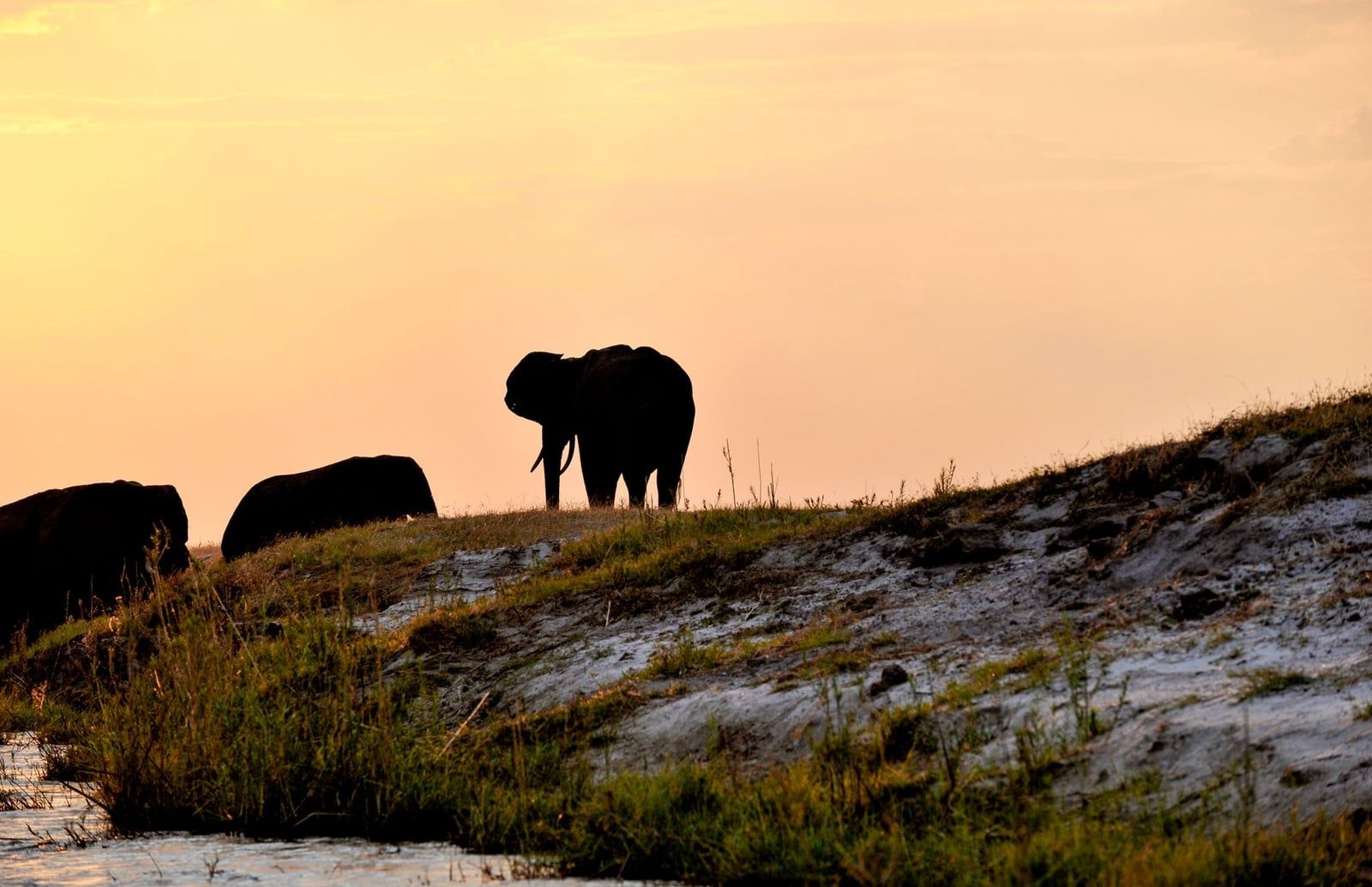
For most visitors this is the half that justifies the trip. Boats drift the Botswana side of the river — the far bank is Namibia's Zambezi Region, and on a clear day you can see four countries from the water. Elephants wade and swim trunk-up between the banks, hippos surface alongside, crocodiles bask on the mud, and buffalo come down to drink as the light drops. A quirk worth knowing: the Chobe River flows east in the dry season, then Zambezi floodwater pushes it back west in the rains — one of the few rivers on Earth that reverses. Bring a warm layer; the boats move, and late-afternoon wind on the water is cold even after a hot day.
- Near-certain: elephants, hippos, crocodiles, buffalo
- Likely: giraffe, zebra, impala, kudu
- Luck: lion, leopard, wild dog
The elephants cross international borders at will, so daily counts swing hard — one traveller's day yields thirty elephants over hours, another's passes a hundred before lunch. Both accounts are true. For a species-by-species read, see our guide to Chobe's animals.
Which half comes first varies by operator; some run the cruise in the morning and the drive after lunch. If the order matters to you — late light on the water photographs better — ask before booking.
What a Chobe Day Trip Costs (and What's Not Included)
Plan on US$165–220 per person for the tour itself, then add the cash items that quotes often leave out. Here's the real budget:
| Item | Typical cost | What to know |
|---|---|---|
| Tour package | US$165–220 | Transfers, game drive, cruise, lunch; park fee inclusion varies by operator |
| Park entry | About US$11 (BWP 120) per day | Long-standing international rate; a higher gazetted schedule was postponed — confirm at the gate. Some operators collect it separately, in cash |
| Guide tip | About US$10 | Welcome, not obligatory |
| Lunch drinks | Extra | Rarely included in the package |
| All-in total | Roughly US$200–245 | Visa fees extra, depending on your paperwork |
Carry US dollars in small bills. Card machines at the gate are unreliable and there are no ATMs in the park; Botswana pula and South African rand also work, but cards rarely do. When comparing quotes, check each line — transfers, activities, lunch, park fees — and get the inclusions in writing. The current rate schedule is on our Chobe hours and fees page.
Visas and the Kazungula Border Crossing
The border is the part people worry about most, and the fix is simple: sort your visa before the day starts. For most day-trippers the right document is the KAZA UniVisa — US$50, valid for up to 30 days within any 12-month period, multiple entries into both Zambia and Zimbabwe, and, per Zambia's Department of Immigration, it officially covers same-day Botswana trips through the Kazungula border. If you're visiting both sides of the falls, it pays for itself in convenience.
The crossing itself is uneventful when it's merely slow. You clear exit formalities at your side, cross to Botswanan entry, show passport and booking confirmation, and repeat in reverse around 5 pm. Twenty to forty minutes each way is normal; truck queues and tour-bus waves stretch it. Your passport needs six months' validity, and many nationalities — US, UK, EU, Canada, Australia — enter Botswana visa-free or on arrival, but requirements are nationality-specific, so check yours before booking. Children under 18 crossing into Botswana reportedly need an unabridged birth certificate; carry it.
When to Go: Dry Season vs Green Season
May to October is the answer for game, almost without qualification. In the dry season the interior dries out and animals concentrate on the permanent Chobe River — August to October is the peak, with elephants, buffalo and lions crowding the riverfront. It's also the hottest and busiest stretch. July and August split the difference: prime game, comfortable mornings. May and June buy you thinner crowds before the buildup.
November to April turns the park green and the viewing harder. Animals disperse with the rain, but you get baby animals, migratory birds among the park's 450+ species, lower prices and quiet tracks — and late rains can still deliver good riverfront herds. Birders should pick this window without hesitation.
- May–June: good game, fewest crowds, cold mornings
- July–August: prime game, mild weather, book ahead
- September–October: best game, 35°C afternoons, peak crowds
- November–April: birds, babies, lower prices, scattered herds
One planning wrinkle: the falls themselves run fullest from February to May, while Chobe's game peaks at the end of the dry season. If the safari is your priority, weight the trip toward August to October. Our best time to visit Chobe guide breaks it down month by month.
How to Book: Shared vs Private Tours and Choosing an Operator
Shared tours dominate the market, and for most travellers they're the right call. The trade-off is pacing: shared pickups have slipped 30-plus minutes waiting for a late family, and vehicles get re-sequenced around the delay. Private tours cost more but hand you the schedule and the vehicle.
| Shared tour | Private tour | |
|---|---|---|
| Cost | The US$165–220 range applies here | Significantly higher |
| Schedule | Fixed, and hostage to other guests' punctuality | You set the timing and activity order |
| Group size | Shared with other travellers | Just your party |
| Pacing | One late group can compress the day | Dwell as long as you like at sightings |
| Best for | Budget travellers and solo visitors | Families and tight itineraries |
Book one to two weeks ahead for July to October, when the best operators and guides fill first and last-minute slots tend to come from weaker ones. Before paying, get the pickup time, group size, activity order and inclusions in writing, and read the cancellation policy — the two-operator handover makes written confirmation matter more than usual. Comparing day trips from Victoria Falls side by side is the fastest way to see which quotes actually include the park fee.
What to Pack and Health Basics
- Passport on your person all day, plus USD cash in small bills for fees and tips
- Layers: June–August river mornings run 6–8°C; October afternoons hit 35°C
- Neutral colours — tsetse flies home in on dark blue and black, and camouflage is illegal in Botswana
- Binoculars and a zoom lens (200–400mm ideal); drones are banned in the park
- Malaria prophylaxis as prescribed, 30%+ DEET repellent, high-SPF sunscreen
Chobe district is a CDC-listed malaria area, with risk highest from November to June — see a doctor about tablets well before you travel, not the night before pickup. Boat shade creates a false sense of sun security; the light off the water burns fast. On the drive, stay seated, keep at least 10 metres from elephants, never block their path to the river, and follow the guide without argument. Rangers issue on-the-spot fines from BWP 500 and can expel vehicles that harass wildlife.
Is It Worth It — and When to Stay Longer Instead
For most Victoria Falls visitors, yes. Nowhere else can you reach world-class elephant viewing on a day trip from a non-safari town, and the two-format day — drive plus water — covers more viewing angles than most single-day safaris manage. Set against that: a 13–14 hour day, an hour of border admin, a 9 am drive start instead of a pre-dawn one, and shared-tour pacing. If any of those is a dealbreaker, the fix isn't skipping Chobe. It's staying longer.
An overnight in Kasane or a one-to-three-night Chobe safari unlocks the dawn and night drives a day trip can't offer, plus the time to reach Savuti and the Linyanti wetlands, both far beyond day-trip range. Kasane's riverside lodges and camping safaris stretch across every budget, and a full Chobe safari tour beats the day trip on every axis except price and convenience.
The in-town alternative is Zambezi National Park, ten minutes from Victoria Falls. No border, no long drive, quiet tracks — and far lower wildlife density. If your schedule only allows half a day, or border admin sounds miserable, it's a fair substitute. If elephants are the point of the day, nothing within range of Victoria Falls competes with Chobe. Book the day trip, go in the dry season if you can, get the visa right, and let the river cruise be the memory you take home.
Frequently asked questions
How far is Chobe National Park from Victoria Falls?
About 100 km (62 miles) from Victoria Falls town — roughly 80 km to the Kazungula border post — which is just over an hour's driving plus 20–40 minutes of border formalities each way. Door to door, the full day runs 12–14 hours.
Do I need a visa for a Chobe day trip from Victoria Falls?
Most day-trippers should buy the US$50 KAZA UniVisa: it allows 30 days of multiple entries to Zambia and Zimbabwe and officially covers same-day Botswana trips via Kazungula. Many nationalities also enter Botswana visa-free, but a single-entry Zimbabwe or Zambia visa won't survive the return leg — hold a double-entry visa or the UniVisa.
How much does a Chobe day trip cost?
US$165–220 per person for the package, plus the Botswana park entry fee (about US$11 under the long-standing schedule, sometimes collected separately in cash), roughly US$10 for the guide's tip, and drinks at lunch. Budget around US$200–245 all-in.
Are elephants guaranteed in Chobe?
Near enough. Chobe carries an estimated 50,000–70,000 elephants, the densest concentration on Earth, and they cluster on the riverfront in the dry season. But herds cross borders freely, so daily numbers swing — and lions and leopards are always possible, never promised.
Game drive or boat cruise first — and which is better?
Order varies by operator. Most travellers rate the cruise the highlight — elephants in the water, late-afternoon light — while an early drive (only possible with a dawn departure) catches peak animal activity. A 9 am drive is the standard compromise of day-tripping.
Is a Chobe day trip safe? Do I need malaria tablets?
Yes to the tablets: Chobe is a CDC-listed malaria area, with risk highest from November to June. Use repellent, cover up at dawn and dusk, and avoid dark blue and black clothing, which attract tsetse flies. On safari, stay seated and follow your guide's instructions.
Should I book a shared or private Chobe day trip?
Shared if budget matters — it's the standard format and works fine. Private if your time at Victoria Falls is short: shared pickups have slipped 30-plus minutes on late guests, and you can't control the day's pace.