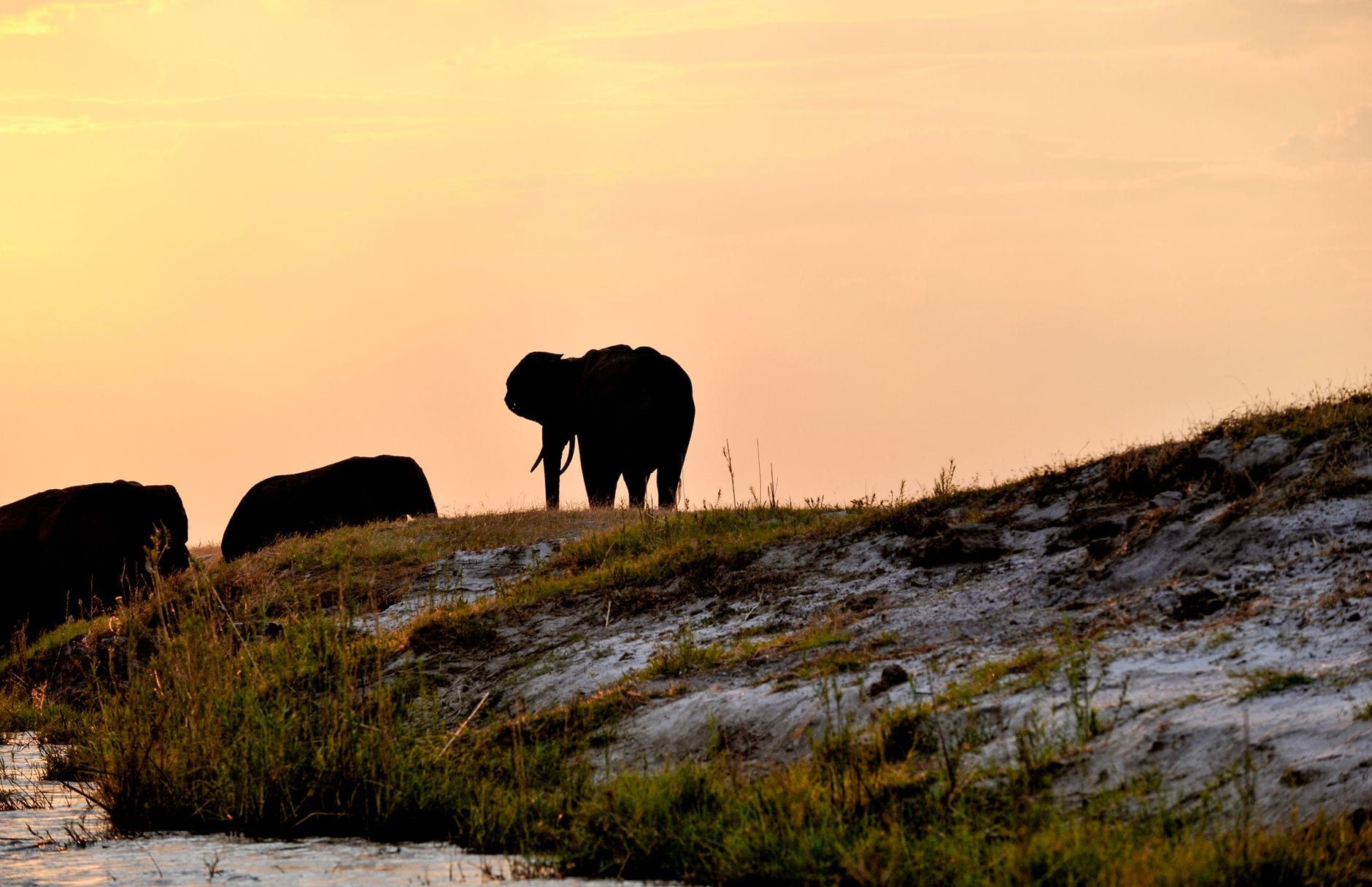
Chobe National Park holds the densest elephant concentration on Earth, four of the Big Five, and lion prides that have learned to hunt elephants. The park covers about 11,700 km² of northern Botswana, where the permanent Chobe River cuts through semi-arid Kalahari sandveld. Water in a thirsty landscape — that's why the wildlife stacks up here like almost nowhere else.
What you actually see depends on three things: the month, the region, and whether you watch from a vehicle or a boat. This guide covers Chobe's animals species by species, then pulls everything together into an honest sighting-odds table. Coming from Zimbabwe? A day trip from Victoria Falls, about 80 km away, is enough for the Riverfront's headline acts.
Chobe's Wildlife at a Glance
Botswana's first national park, declared in 1967, is still its most biologically diverse. It runs from the Chobe River floodplains through mopane woodland to the Savuti Marsh, the Linyanti swamps and the arid Ngwezumba pans — four regions that behave like separate parks. The Riverfront (Serondela) is the classic game-drive-and-cruise zone, Savuti is predator country, Linyanti is wild-dog and leopard territory, and the Nogatsaa area of the interior is quiet enough that you can drive for hours without another vehicle.
The park is unfenced across most of its boundaries and sits inside KAZA — the Kavango–Zambezi Transfrontier Conservation Area, the largest conservation area on Earth, spanning Angola, Namibia, Botswana, Zambia and Zimbabwe. Animals cross borders freely, so local counts rise and fall with the rains. That matters for your expectations: nothing here is fenced in, and nothing is guaranteed except the permanent water.
Chobe's Big Five scorecard reads four out of five. Elephant, buffalo, lion and leopard are all present and regularly seen; white and black rhino are not resident, surviving in Botswana only inside closely protected private areas. No Chobe itinerary should be built around a rhino. The bird list tops 450 species, and the aquatic cast — hippos, crocodiles, tigerfish — is reason enough to get on the water. If you're planning a Chobe safari around specific animals, the framework below is the one to work from: species first, then where and when your chances peak.
Elephants: Chobe's Signature Animal
Chobe's elephant numbers get mangled online, so here's the clean version. The "120,000–130,000 elephants in Chobe" claim you'll read on most safari sites is an ecosystem figure: Elephants Without Borders' aerial survey estimated 129,939 (±12,500) elephants across northern Botswana — the largest population in Africa — and the 2022 KAZA Elephant Survey counted 131,909 in Botswana as a whole. The Chobe area is commonly estimated at 50,000–70,000 in peak season. But survey estimates inside the park boundary itself have been lower, falling from 26,609 in 2010 to 15,404 in 2018 while the wider regional population held steady. Elephants move; the boundary is invisible to them.
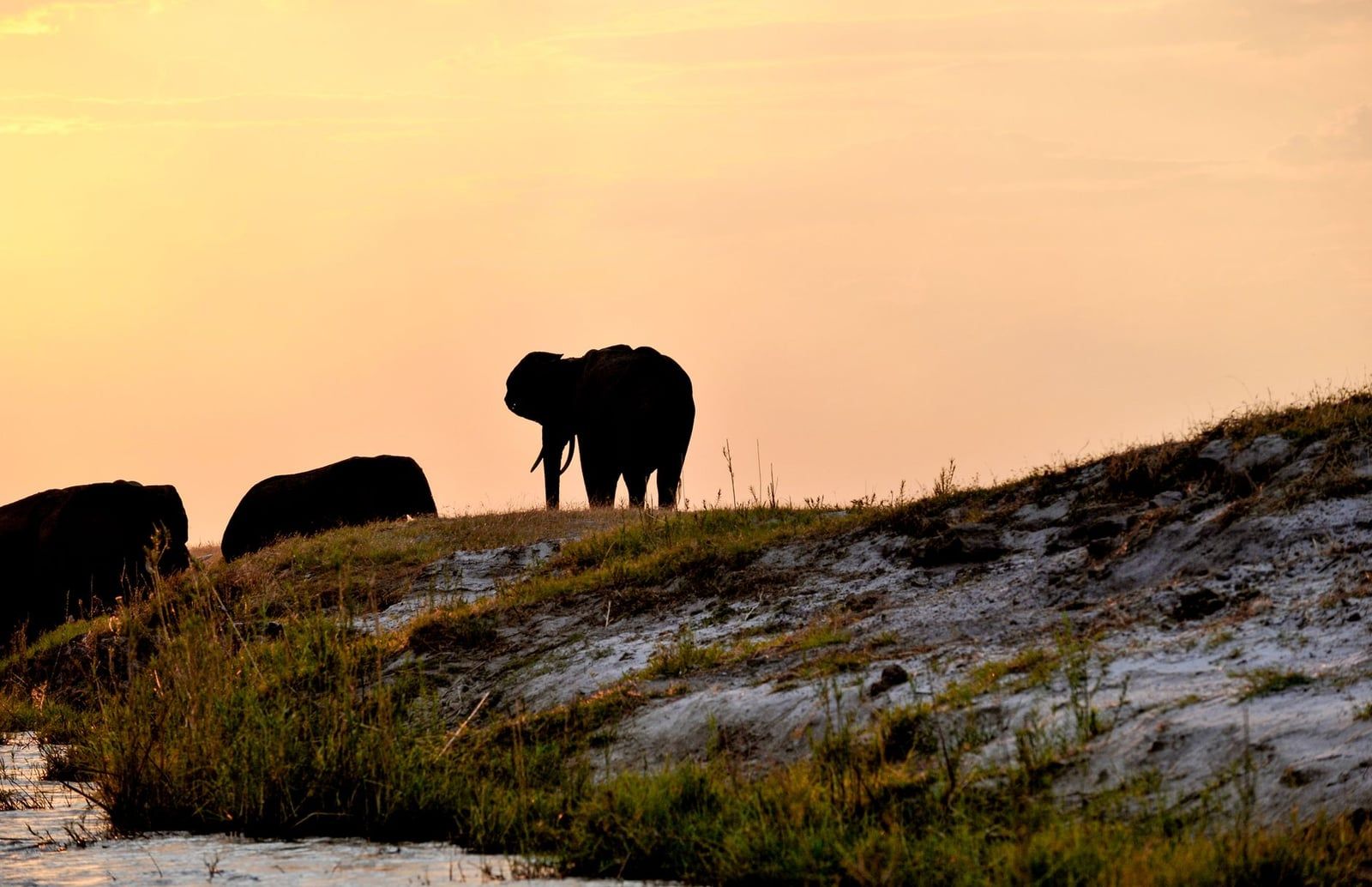
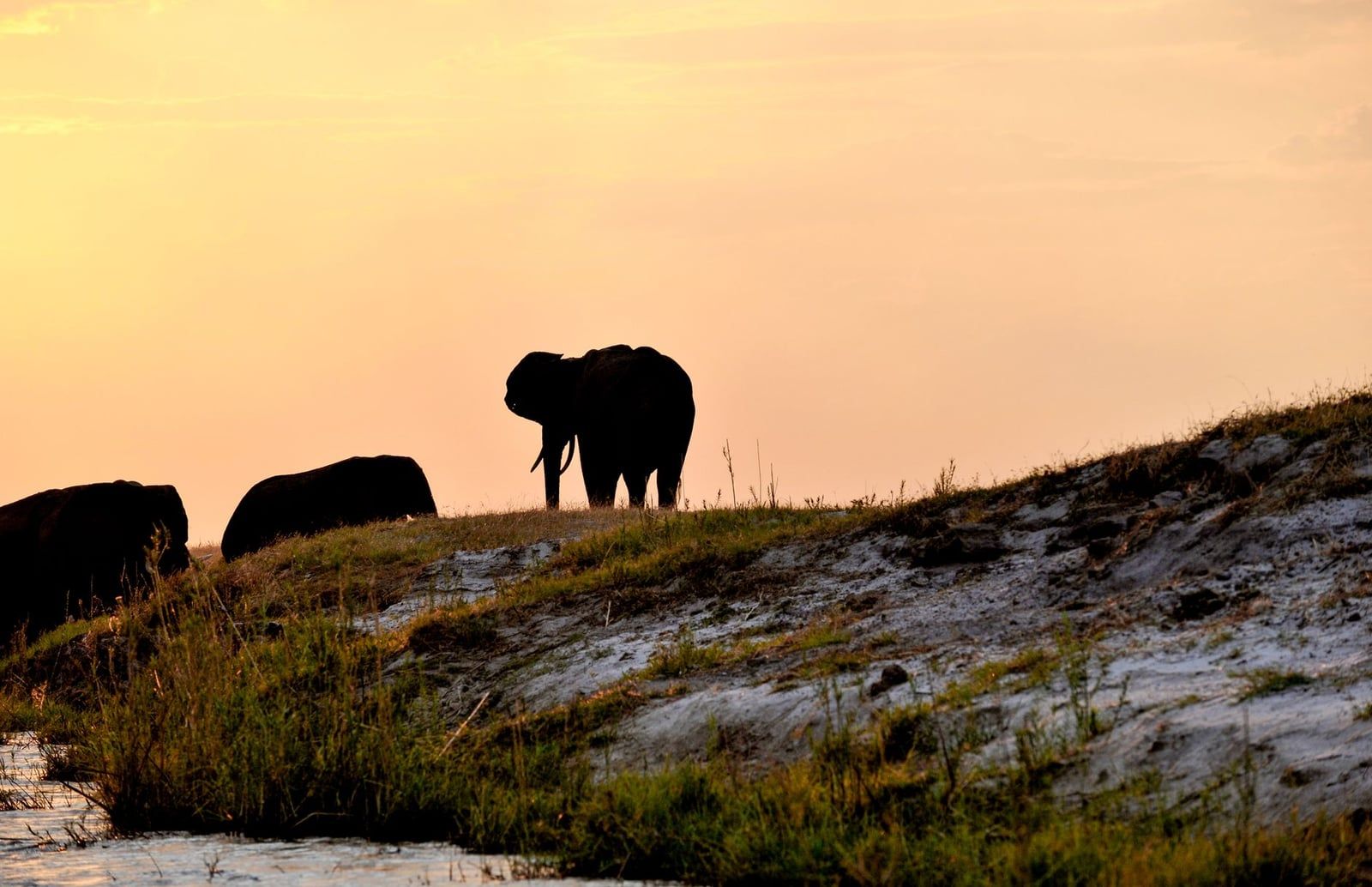
The dry season puts on the show. From May to October, herds of 100–200 elephants come down to the Chobe River every afternoon to drink, bathe and swim across to Sedudu Island, and a late boat cruise or riverfront drive puts you among them. Crossings are the signature sight: trunk up, ears out, only nostrils above the waterline, calves tucked between adults.
When the rains arrive, roughly November to March, the herds disperse into the Chobe Enclave, the Linyanti swamps and the Kasane Forest Reserves. You'll still see elephants daily — just in smaller groups, further from the river. Photographers who want golden light and green backgrounds prefer that window. First-timers who want the wall-to-wall spectacle should not.
One caveat worth knowing: park-level counts declined between 2010 and 2018 even as Botswana's overall population grew, which researchers read as redistribution rather than loss. Chobe's elephants were hunted hard before the area was protected as a non-hunting zone in the 1930s. The herds in front of you are the recovery.
Best window: May–October, peaking August–October when the river is the only water for kilometres. Best place: the Riverfront between Sedudu Gate and Ihaha, or from the water on a sunset cruise. Best time of day: late afternoon, when the big herds come down to drink.
Big Cats, Wild Dogs and Other Predators
Predator odds in Chobe run from "expected" to "you'll need luck." Lion is rated common; leopard and wild dog occasional; cheetah rare. Here's what each rating means in practice.
Lion
Resident prides hunt throughout the park, and lions are seen on most multi-day visits. On the Riverfront, prides work the buffalo and puku on the floodplains; in Savuti, they do something stranger. Savuti's prides are internationally known for hunting adult elephants — behaviour documented extensively in BBC and National Geographic films, usually late in the dry season when the herds are weakened. July to September is the strongest window for lion action park-wide.
Leopard
Leopards live throughout Chobe but are seen on roughly half of visits. Your best odds are in the riverine forest along the Chobe River in the Serondela area, and in the mopane woodland of Savuti and Linyanti. They're largely nocturnal, so book the earliest gate-opening drives and the last afternoon slots. A leopard draped over a riverine branch at dawn is a realistic goal; a midday leopard is not.
Cheetah
The rarest cat in the park, and the one to be honest about. Chobe's dense woodland works against a sprinting hunter that needs open sightlines, so sightings are scarce — in high season, perhaps one or two per week across the whole Riverfront. Your best (still slim) chance is on Savuti's open grasslands, and in Linyanti.
Wild dog
The painted wolf is one of Chobe's biggest prizes. Botswana holds roughly a third of all the wild dogs left on Earth, and the Chobe–Linyanti–Savuti belt holds a major share of them. Packs of 6–20 are typical. They den from June to August, the pups emerge in September, and by October they're running with the pack — which makes June to October the viewing window, with Linyanti and Savuti the strongholds. If wild dogs are your target, plan the whole trip around those areas.
Hyenas, jackals and the small stuff
Spotted hyenas are common along the riverfront, especially at dawn when the night's kills are still being argued over. Brown hyenas are the opposite: present in Savuti but rarely seen. Keep an eye out, too, for black-backed jackals trotting the tracks and the aardwolf, a nocturnal termite-eater that most visitors never clock. One hyena species is a freebie; the other is a trophy.
Hippos, Crocodiles and the Chobe River's Aquatic Life
The Chobe River carries one of the highest hippo densities in Africa. Pods surface, honk and jostle along the whole navigable stretch, and you'll hear them from riverside camps all night. Nile crocodiles share the water — some exceeding five metres — and the big ones sun on the mud banks through the middle of the day.
The boat cruise is the only way to meet this half of the park. From the water you get eye-level views of elephants drinking on the bank, whole families swimming the channel, buffalo crowding the shoreline at dusk, and waterbirds working the shallows a metre from the hull. It's also the best photography platform in Chobe: animals at water level rather than staring down from a vehicle. Shared three-hour cruises from Kasane run about US$40 per person — the drive-plus-cruise combination most Chobe safari tours are built around.
Anglers know the river for its tigerfish, a hard-fighting striped predator that draws fishing safaris to the Kasane stretch. For everyone else, one rule overrides all the rest.
Buffalo, Zebra, Giraffe and Chobe's Antelopes
Chobe's non-predator mammals are the reason a two-day visit feels full: buffalo by the thousand, a migrating zebra population, giraffe in the woodland, and an antelope lineup that includes a species found almost nowhere else in southern Africa.
Buffalo
From July onward, breeding herds of 500–1,000 buffalo mass at the water on the Riverfront — a black wall of horns and dust that lion prides shadow constantly. Old breeding bulls hang around the river year-round. The dry season concentrates them for a simple reason: the pans and puddles inland dry up, and the Chobe River is what's left.
Zebra and the great migration you've never heard of
Chobe's zebras take part in the second-longest terrestrial migration on the planet, and most visitors have no idea. The herds graze the Chobe floodplains from June to early November, then move south with the first rains in November–December to the Nxai Pan and Makgadikgadi salt pans, returning north in March–April. Resident zebras stay behind all year, so you'll see stripes in every season — just not the massed columns. Time a wet-season trip to Nxai Pan and you can watch the migration's other end.
Giraffe
Southern giraffe are common in the mopane and acacia woodland behind the Riverfront, browsing the canopy in loose groups. The sight worth waiting for is a drinking giraffe at the river — the awkward splayed-leg stance, head dipping between forelegs, is one of the animal kingdom's least dignified manoeuvres and one of Chobe's best photo moments.
Puku, lechwe and the antelope lineup
Puku are Chobe's antelope speciality. Their southern African range is effectively restricted to the Chobe Riverfront, so this is the one place in the region where a sighting is near-guaranteed — a genuine bucket-list tick for safari regulars. Red lechwe bound through the floodplain shallows on outsized hind legs, and waterbuck stand in the woodland edge with shaggy grey coats.
Telling the three water antelopes apart is quick once you know the trick. Puku are stocky and uniform sandy-gold, with short ridged horns, and they graze the short riverfront grass. Red lechwe are brighter chestnut, visibly longer in the leg, and they run through shallow water rather than away from it. Waterbuck are bigger and greyer, with a white ring on the rump that field guides call the toilet seat — you won't forget it once you've seen it.
Beyond those, the common cast runs to impala (everywhere), kudu in the woodland, tsessebe on the grasslands, blue wildebeest, warthog and steenbok. Two trophies sit at the top of the list: sable antelope in the drier mopane of Savuti and around the Kasane Forest Reserve, and the rarer roan, seen occasionally in Savuti. Nogatsaa's pans are another good sable bet.
Birdlife: 450+ Species and the River Specials
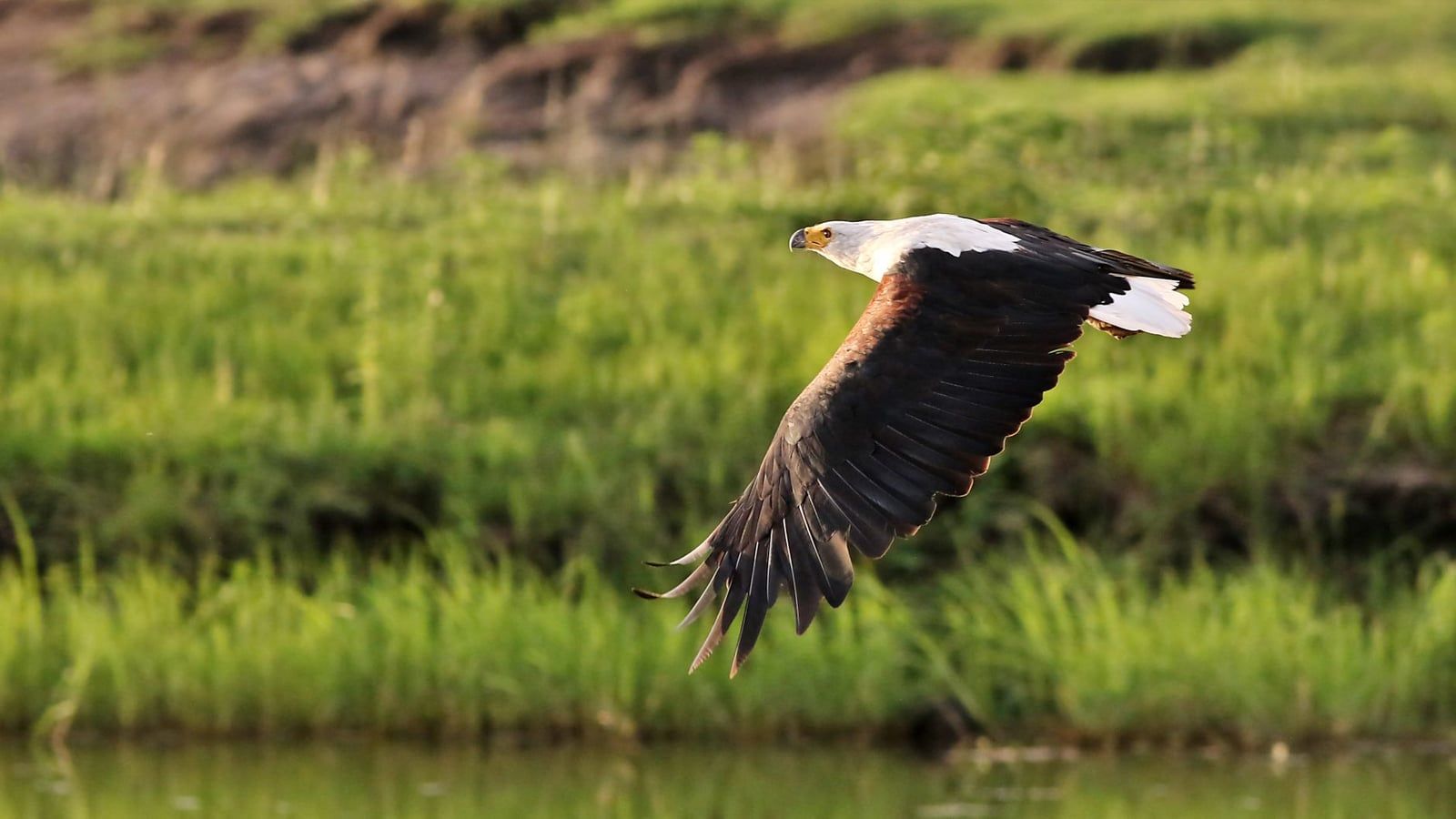
Chobe is a serious birding destination that most visitors arrive at for the mammals. More than 450 species are recorded, and the river concentrates them. The African fish eagle is the signature — that falling, laughing call carries the whole floodplain, and pairs perch openly on dead trees over the water. Over the woodland, watch for martial and bateleur eagles and the palm-nut vulture.
Waterbirds are the Riverfront's strong suit. The near-threatened African skimmer is a Chobe speciality, sweeping the shallows with its lower mandible slicing the surface. Saddle-billed storks wade the floodplains, African jacanas walk the lily pads, and giant kingfishers dive from overhanging branches. Pygmy geese hide among the waterlilies.
Two birds justify a trip on their own. Pel's fishing owl — a huge ginger nocturnal fishing owl — has one of its best African territories in the Savuti and Linyanti waterways; you'll need a guided evening drive and luck. And from September to March, carmine bee-eaters nest in colonies in the Chobe riverbanks, hundreds of scarlet birds hawking insects over the water. The African finfoot skulks along the vegetated banks for patient eyes.
The migratory season runs November to April, when Palearctic and intra-African arrivals — European bee-eaters, steppe eagles, Amur falcons, caspian plovers — swell the resident list. December to March is peak birding. The trade-off is structural: the same rains that bring the birds scatter the big game, so green-season Chobe is a birder's park, not a first-timer's.
Where and When to See Chobe's Animals (and Your Real Chances)
Chobe's four regions deliver different animals, and choosing between them is the biggest planning decision you'll make.
The Riverfront (Serondela)
The classic zone, 8 km from Kasane via Sedudu Gate: elephants, buffalo, hippo, puku, giraffe and the river specials, plus the boat cruise. This is the region for first-timers, families and anyone on a one-day visit — and the only one reachable on tarmac-adjacent roads. It's also the busiest, but congestion is time-of-day-based: arrive at gate opening or stay out past 16:00 and you'll share sightings with a fraction of the crowds.
Savuti
Predator country in the park's west: the elephant-hunting lion prides, strong hyena numbers, the best cheetah odds on its open grasslands, and sable and roan in the dry mopane. Good year-round, but ferociously hot in September and October. Reaching it from Kasane is a 5–6 hour deep-sand drive of about 195 km.
Linyanti
The northwest wetlands are wild-dog and leopard territory, with strong dry-season elephant and lechwe concentrations and Pel's fishing owl in the riverine forest. Fewer vehicles, more logistics: access is by deep-sand 4×4 track or light-aircraft charter. If wild dogs are the goal, this is where you sleep.
Nogatsaa and the Ngwezumba pans
Chobe's wildest, lowest-density sector — hot mopane and grassland where buffalo and elephant breeding herds move between clay pans. Sable and roan are realistic, wild dog occasional, and you can drive for hours without seeing another vehicle. Go for solitude; don't go expecting the Riverfront's density.
Month by month
- May–July: herds gather at the river; cold dawn starts (6–8 °C in midwinter).
- August–October: peak sightings, biggest elephant herds; October hits ~35 °C.
- November–December: migrants and antelope calves arrive; game starts dispersing.
- January–March: green season — birds and babies, mammals scattered and harder to find.
- April: shoulder month, greenest landscape, thinning crowds.
Our full best time to visit Chobe guide breaks the calendar down in detail, but the short version is August–October for animals, December–March for birds.
| Your chances | Species | Best bet |
|---|---|---|
| Near-guaranteed | Elephant, hippo | Dry season, Chobe Riverfront |
| Common | Buffalo, giraffe, zebra, impala, lion, spotted hyena | Riverfront and Savuti, May–October |
| Occasional | Leopard, wild dog, kudu, tsessebe | Linyanti and Savuti; dawn and dusk drives |
| Rare | Cheetah, brown hyena, roan antelope, aardwolf | Savuti grasslands; luck required |
| Effectively absent | White and black rhino | Nowhere in the park |
How to convert those odds. Give Chobe two to three days minimum — one for the Riverfront, one for the water, and a third for Savuti or Linyanti if the deep-sand drive appeals. Pair every land-based day with a river cruise; the two perspectives see different animals. Be at the gate at opening for predators and out until closing for the elephant spectacle. And be realistic about the rare column: a guide who promises cheetah is selling you something no honest operator can. For sleeping arrangements near each region, our where to stay in Chobe guide maps the lodges and campsites.
Frequently asked questions
Can you see the Big Five in Chobe National Park?
Four of the five — elephant, buffalo, lion and leopard — are reliably present, with lion rated common and leopard occasional. White and black rhino are not resident; they survive in Botswana only inside closely protected private areas, so sightings are rare and should not be planned around.
How many elephants are in Chobe National Park?
The famous '120,000' is an ecosystem figure. Elephants Without Borders' aerial survey estimated 129,939 (±12,500) elephants across northern Botswana, and the 2022 KAZA Elephant Survey counted 131,909 for Botswana. Within the park boundary itself, survey estimates have ranged roughly 15,000–26,000 — falling from 26,609 in 2010 to 15,404 in 2018 — with the Chobe area commonly estimated at 50,000–70,000 in peak season.
What is the best time of year to see animals in Chobe?
The dry season, May to October, is best, peaking August–October when vegetation is thin and herds concentrate at the Chobe River. October is the hottest month (around 35 °C). The green season from November to March suits birders and photographers more than first-time big-game viewers.
What animals will I see on a Chobe River boat cruise?
Hippos and Nile crocodiles (some over five metres) up close, elephants drinking and swimming the channel, buffalo on the banks, and waterbirds — African fish eagles, skimmers and giant kingfishers — many at eye level or from below the waterline, a perspective a game drive can't offer.
Which Chobe animals are the hardest to see?
Cheetah (rated rare — Savuti's open grasslands are the best chance, perhaps one or two sightings a week in high season), brown hyena, aardwolf and roan antelope. Rhino is effectively absent. Leopards and wild dogs are occasional rather than rare, best in the Linyanti and Savuti areas.
Is the green season worth visiting for wildlife?
Yes, for birders: 450+ species with Palearctic and intra-African migrants from November to April, carmine bee-eater colonies on the riverbanks (September–March) and antelope calving. The trade-off is that large mammals disperse away from the river once rainwater is widespread, so big-game viewing is harder.