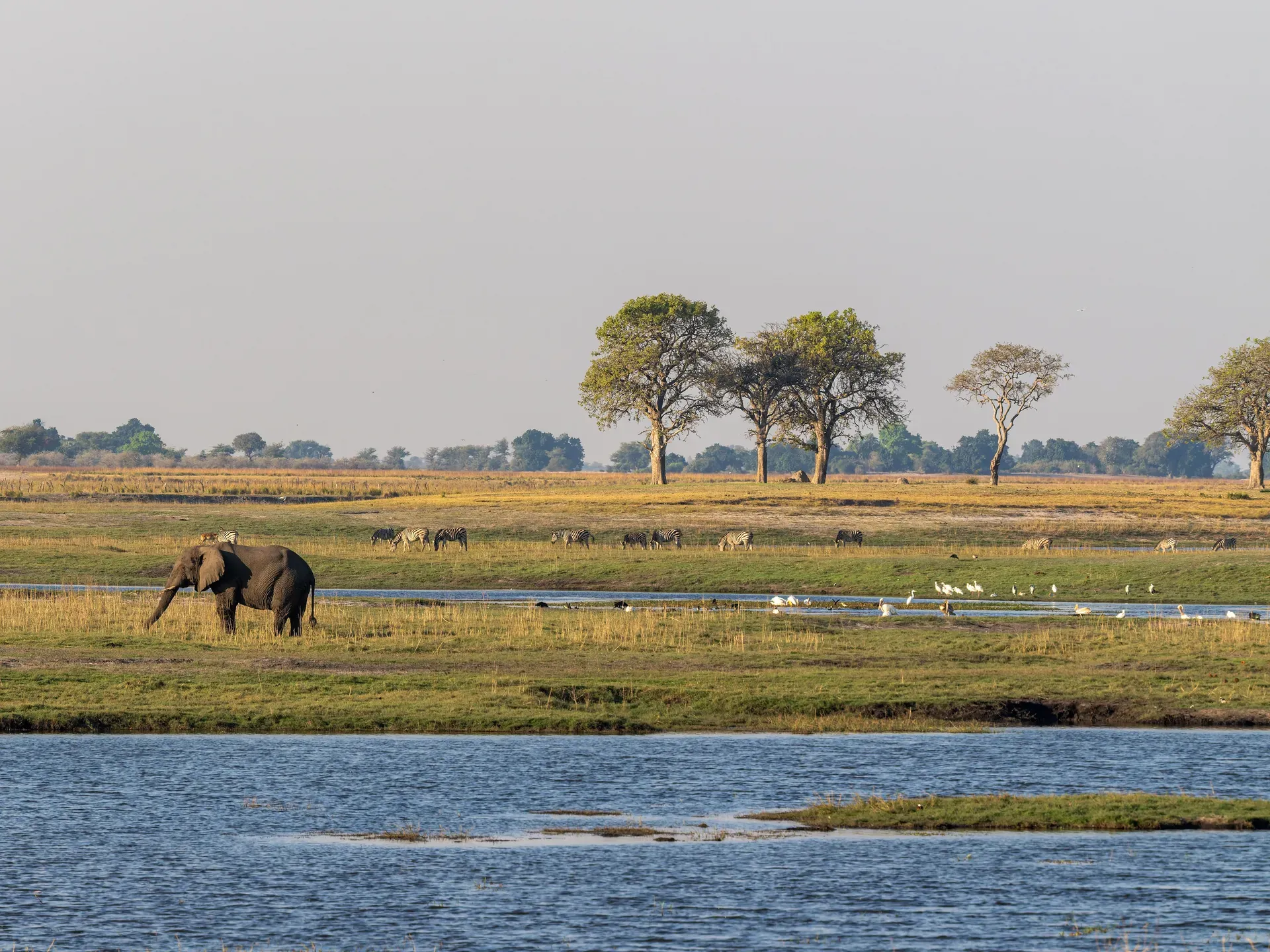
Yes, you can sleep inside Chobe National Park — but only just. One permanent lodge, Chobe Game Lodge, holds the in-park ground, backed by a luxury tented camp, mobile safari outfits and the Ihaha public campsite. Everyone else beds down in or around Kasane, the gateway town 8 km from Sedudu Gate, and works outward from there.
That outward spread gives you five realistic bases, each with its own price band and its own pace: Kasane town, the in-park Riverfront, the quieter Chobe Forest Reserve on the western edge, the remote Savuti and Linyanti concessions, and houseboats on the Chobe River itself. This guide costs out all five, names the lodges worth knowing, and tells you who each one suits. Unless noted, rates are verified low-season prices per person sharing.
Chobe Accommodation at a Glance
The park itself splits into four regions — the Chobe Riverfront beside Kasane, Savuti, Linyanti and the little-visited Nogatsaa pans — and the Riverfront pulls the overwhelming majority of visitors. Where you sleep determines your gate commute, how many vehicles share your sightings, and whether game drives and boat cruises come bundled with the room or get paid for separately. Start with the map below, then read the base that matches your budget.
| Base | Vibe | Typical price ppn | Best for |
|---|---|---|---|
| Kasane & Kazungula | Town convenience, book activities separately | $10 dorms – $150 B&B | Budgets, self-drivers, short stays |
| In-park Riverfront | Immersion, first-light game drives | $370 – $1,090+ | Splurge first-timers, photographers |
| Chobe Forest Reserve (west) | Quiet floodplain, night drives, walks | $483 – $768 | Couples, wildlife-first trips |
| Savuti & Linyanti | Fly-in wilderness, big predators | $650 – $2,200+ | Second- and third-time safari-goers |
| Houseboats | Floating lodge on the river | $515 – $990 | Celebrations, water-level viewing |
One caveat before the detail: in-park and riverfront lodge rates are almost always fully inclusive — meals, drinks, drives and cruises — while Kasane rates are bed-and-breakfast with activities on top. A $90 Kasane room plus two paid activities can still undercut a $400 lodge. Do the arithmetic for your own dates before assuming the expensive base is the expensive trip.
Where to Stay: The Five Bases Around Chobe
Each base below gets the same treatment: what it is, named properties with real low-season rates, how far you are from the game, and the honest trade-offs. Read them in order of price — they climb from Kasane's dorm beds to Savuti's $2,000 suites — or jump straight to the one your budget allows.
Kasane & Kazungula: the practical base
Kasane wins on price and flexibility. Lodging runs from Elephant Trail Guesthouse (dorms from about $10, private rooms from $20) through good-value riverside lodges like Thebe River Safaris and River View Lodge, up to the big-name properties at the top of town. You eat in restaurants when you like, book game drives and river cruises with whichever operator you like, and Sedudu Gate sits 8 km away — ten minutes in a taxi.
Two large hotels anchor the upper end: Chobe Safari Lodge at roughly $480 per person fully inclusive and Chobe River Lodge at about $360 half board, a ten-minute drive from the park entrance. Plenty of visitors arrive on a day trip from Victoria Falls, 80 km away, but overnighting here buys you the early gate opening that day-trippers always miss. The trade-offs are real, though: town noise, and riverfront tracks that jam with vehicles at peak season.
Inside the park on the Riverfront
Chobe Game Lodge is the only permanent lodge inside Chobe National Park — Botswana's first five-star property, with 43 standard rooms and four suites on the riverbank at about $690 per person sharing fully inclusive in low season. It has also run solar-powered boats and safari vehicles since 2014, so the game drives are near-silent. You are first through the sightings at dawn and last out at dusk, with no transfer back to town cutting your day short.
Two other routes get you inside the fence. &Beyond Chobe Under Canvas pitches luxury tents within the park at $650–1,090 per person per night, while guided mobile camping safaris — staffed camps that move with you — start around $370 fully inclusive, making them the cheapest genuine in-park stay. Budget self-drivers should target Ihaha, the only public campsite on the Riverfront, at USD 50 a night for international visitors; it is unfenced, and elephant herds routinely walk between the ablution block and the water. Book it months ahead. Many of these stays, and the safari tours built around them, fold park fees into the package — always check.
The quieter west: Ngoma, Muchenje and the forest reserve
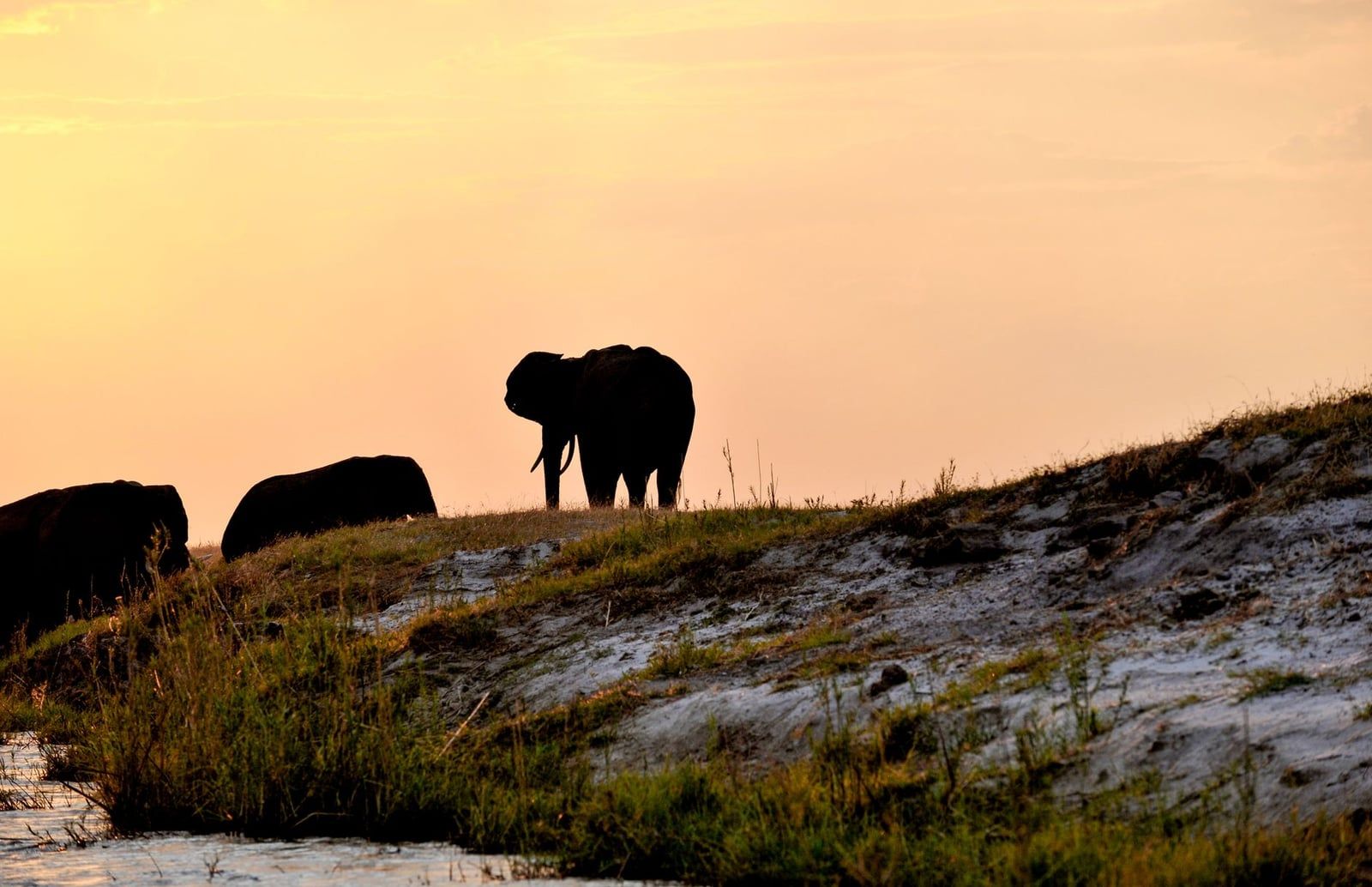
Drive 55–60 km west of Kasane and the crowds fall away. Ngoma Safari Lodge sits in the Chobe Forest Reserve at about $768 per person fully inclusive, with night drives and walking safaris that are prohibited inside the national park itself. Muchenje Safari Lodge, 60 km out, runs eleven chalets at around $560 with elevated floodplain views and a family room sleeping four — the western game drives see a fraction of the Riverfront's traffic.
Halfway out, the Lesoma Valley adds two more options. Elephant Valley Lodge, 20 km from the park entrance and electric-fenced, costs about $483 per person — a genuine mid-range choice with big-tent comfort. Senyati Safari Camp, also 20 km from Kasane, is built around an elephant-frequented waterhole with an underground viewing bunker. You will pay the same daily park entry as Kasane guests, plus a longer commute to the gate — the payoff is silence.
Remote Savuti & Linyanti
Savuti and Linyanti are fly-in country, priced accordingly: lodges run upwards of $650 per person per night in low season before transfer fees, and Wilderness DumaTau starts near $2,220. The reward is Botswana's great predator theatre — the Savuti Marsh lions are famous — at vehicle densities the Riverfront never matches. Driving yourself is possible but serious: the Kasane–Savuti run is about 195 km of deep sand, 5–6 hours in the dry season. Nogatsaa, the hot mopane interior beyond it, has no lodges to speak of; it belongs to self-drivers and mobile safaris.
Choose this base for a second or third safari, when you have already seen the Riverfront herds and want space around them. First-timers usually get better value from Kasane or the Riverfront — the extra $1,000 a night buys remoteness, not more animals.
Houseboats on the Chobe River
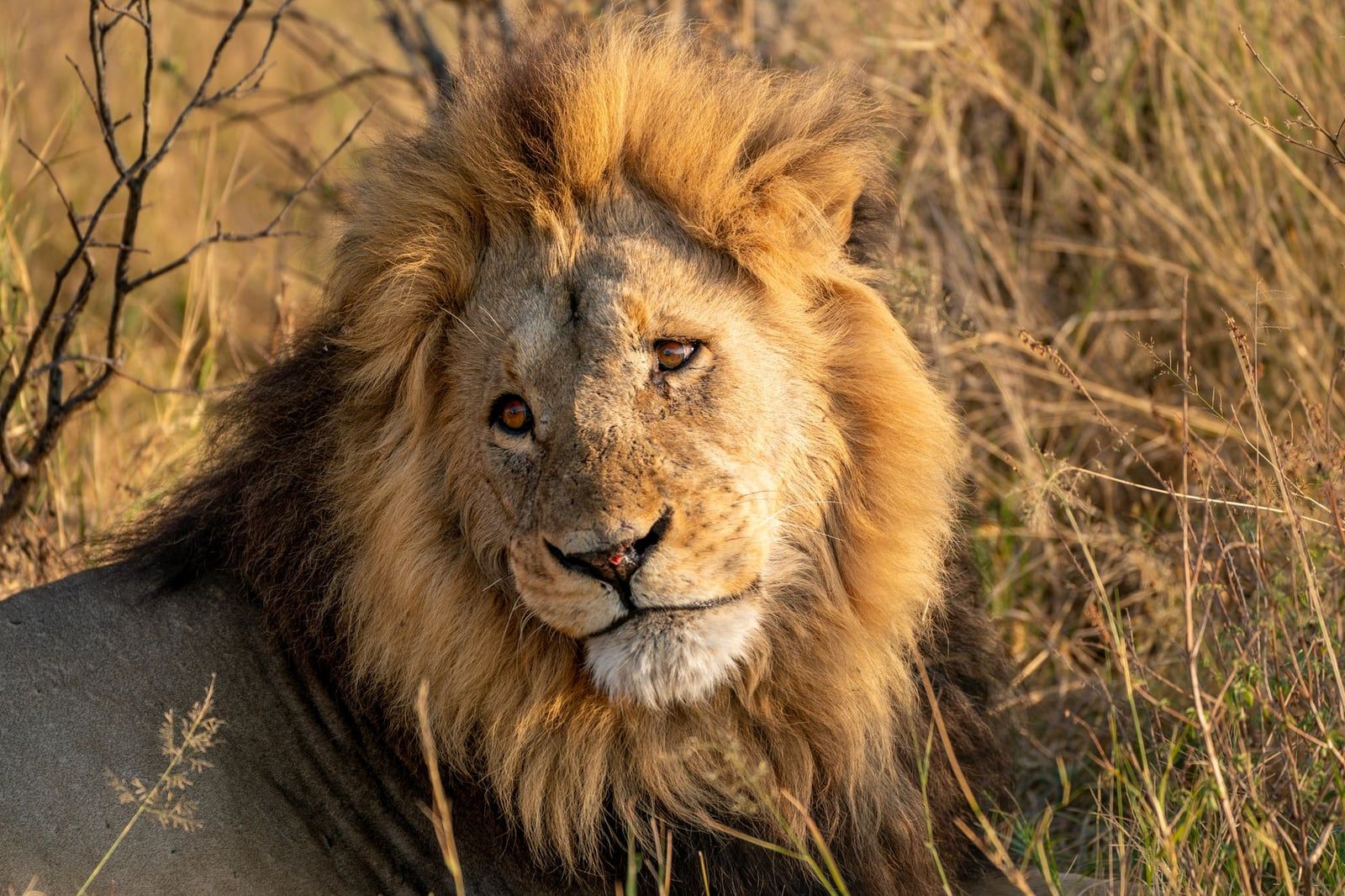
You can sleep on the river itself. The Zambezi Queen charges $515–990 per person per night depending on season, boat and cabin, and the smaller Chobe Princesses start from ZAR 10,089 per person sharing fully inclusive in low season. Both are fully inclusive with a two-night minimum, and both moor and sail on the Chobe between Botswana and Namibia, operating from the Namibian side — so bring your passport and expect border formalities on top of the park rules. SADC residents can get discounts of up to 45% on Chobe Princess rates.
Game viewing happens from your cabin deck: elephants swim past trunk-up, buffalo file down to drink at dusk, and the boat repositions instead of you. It is the most unusual night's sleep in the Chobe system, and a strong pick for a celebration — just not for anyone who wants to be on land at first light.
Accommodation Types & What They Cost
Strip away the geography and Chobe lodging sorts into six types with six price bands. All figures are per person per night unless stated, low-season, sharing.
| Type | Price band | Named example | Rate includes |
|---|---|---|---|
| Public campsites | $10–20 ppn; Ihaha $50/site | Ihaha (in-park) | Pitch only; bring everything |
| Backpackers & self-catering | $10–40 ppn / $40–80 per room | Elephant Trail Guesthouse | Bed, sometimes kitchen; no activities |
| Kasane town lodges | $50–150 ppn | Thebe River Safaris | B&B basis; drives and cruises extra |
| Mobile camping safaris | from ~$370 ppn | Guided mobile outfits | Meals, camp staff, activities, park fees |
| Full-service lodges | $250–600+ ppn ($500–1,200+ top concessions) | Chobe Game Lodge ($690) | Meals, drinks, drives, cruises |
| Houseboats | $515–990 ppn | Zambezi Queen | Fully inclusive, 2-night minimum |
Read the fine print on "fully inclusive" — in Chobe it normally means all meals, local drinks, game drives and boat cruises. Kasane B&B rates cover none of that: budget another amount for a shared cruise (about US$40) and a game drive each day you go out. Self-catering is the cheapest family route in Kasane, since you skip both restaurant prices and lodge activity mark-ups.
Camping is the budget way into the park proper. Ihaha is the only public campsite on the Riverfront, and it fills months out — reserve through the park authorities before you lock in dates, and note that check-out is 11:00. Savuti and Linyanti campsites exist too, bookable through the operators that run them. If you want a bed raised off the sand but still inside the park, the mobile safari at ~$370 is your floor price.
Where does splurging actually change the experience? Private concessions and forest-reserve lodges buy you night drives, walking safaris and empty tracks — things the national park itself cannot sell you. What money cannot buy is different wildlife: the elephant herds come to the river regardless of what you paid, and a visitor in a $90 Kasane room watches the same hundred-strong crossing as the guest at Chobe Game Lodge. Splurge on exclusivity, not on animals.
Which Base Fits Your Trip
Tight budgets: Kasane guesthouses and campsites. Elephant Trail dorms from $10, self-catering rooms from $40, and shared activities booked per outing — the only way to do Chobe under $100 a day all-in.
Families with kids: fenced or family-room properties. Elephant Valley Lodge's electric fence and Muchenje's four-bed family room are the safest picks. Note the age caveat: many lodges restrict game drives to children over 6 or over 12, though booking a private vehicle usually lifts the limit — confirm each lodge's policy before paying.
Honeymoons and celebrations: Ngoma Safari Lodge for a land-based splurge, or a Chobe Princess houseboat for two nights on the water with the river to yourselves at dusk.
First-time safari-goers: Kasane or the in-park Riverfront. Both make it easy to pair a morning game drive with an afternoon boat cruise — the two halves of a first Chobe visit — and Kasane does it for half the price if the in-park rates sting.
Photographers and birders: green season on the Riverfront, January to March, when migrants swell the park's 450-plus species list and rates drop 30–50%. Specialist photographic operators work out of Kasane year-round.
Self-drivers: Kasane campsites and self-catering, with Ihaha pre-booked for a night inside the park. Gates open 06:00 (05:30 October–March) and close 18:30 (19:00 October–March); no driving after sunset, so plan your arrival accordingly.
When & How to Book
Book 6–12 months ahead for July–September. The prime riverfront and Savuti/Linyanti camps sell out 8–10 months out for August — the tightest month in the calendar. Ihaha's campsites need 4–5 months' notice even in quieter periods, and unfenced sites are routinely full long before arrival.
Shoulder season, May–June and October, is the value sweet spot: strong dry-season game viewing with two-to-six-month booking windows and softer rates. October is the hottest month at up to 35 °C, but animals crowd the river hard. Green season, November–April, brings 30–50% off — and closures, with some lodges shutting November–March for maintenance, so confirm your property stays open. Green-season trips can often be booked just weeks ahead, and January–March delivers lush landscapes, fewer tourists and peak birding as migrants arrive from November. Our guide to the best time to visit Chobe breaks the seasons down month by month.
On bundling: lodge-run packages at all-inclusive properties rarely discount — the rate is the rate. What bundling does simplify is logistics; at Kasane B&Bs, booking drives, cruises and transfers through one operator usually beats assembling them piecemeal, even when the savings are small. Dry season, May to October, is when the big elephant herds converge on the river — July–October is peak — so that is when booking early matters most.
Practicalities: Park Fees, Gates & Getting There
Park entry is charged per person per day — including your departure day — and stacks on top of any outside-park accommodation. Under the long-standing schedule, international adults pay BWP 120 (about US$11), children 8–17 pay BWP 60, and under-8s enter free. A revised schedule raising international adult fees to BWP 270 was gazetted for April 2026 but its rollout was postponed, so confirm the applicable rate at Sedudu Gate. Card machines there fail often and there are no ATMs in the park — withdraw pula in Kasane first, and keep your receipt for your whole stay, since re-entry triggers a new daily fee. Full details are in our hours and fees guide.
Gate distances frame your base choice. Sedudu Gate is 8 km from Kasane; the forest-reserve lodges sit 55–60 km west, which means an early alarm and a long commute to reach the Riverfront at opening — weigh that against the quiet. From Victoria Falls, the drive is roughly 80 km via the Kazungula border post — an hour's road time plus border formalities — or a 20–30 minute charter flight to Kasane. Our directions guide covers every route, and tours from Victoria Falls handle the transfers if you would rather not.
Three final logistics. Houseboat guests cross into Namibia, so passports are mandatory and visa rules vary by nationality — check yours before booking. Ihaha reservations must be made in advance and are checked at the gate; there is no wild camping in Chobe. And the whole district is a high-risk malaria zone, worst in the rainy season: antimalarials and repellent with at least 30% DEET matter most for campers and budget travellers, who spend the most time outdoors at dawn and dusk.
Chobe Accommodation FAQs
Can you stay inside Chobe National Park?
Yes, but options are limited. Chobe Game Lodge is the only permanent lodge inside the park (about $690 per person fully inclusive in low season), joined by &Beyond Chobe Under Canvas at $650–1,090 and guided mobile camping safaris from around $370 fully inclusive. The Ihaha public campsite is the budget option at USD 50 a night for international visitors — book well ahead.
Is it better to stay in Kasane or inside the park?
Kasane gives you value and flexibility — $10 dorms to $150 B&B lodges, restaurants, and any operator's activities — 8 km from Sedudu Gate. In-park lodges cost $250–600+ per person all-inclusive but put you at the sightings at first light with no daily transfers. A middle path is the Chobe Forest Reserve, 55–60 km west, which trades gate proximity for quiet drives and night safaris.
How much does Chobe accommodation cost per night?
Campsites run $10–20 per person, backpacker dorms $10–40, and Kasane lodges $50–150 on a B&B basis. In-park and riverfront lodges cost $250–600+ fully inclusive, top concessions $500–1,200+, and houseboats $515–990. Green season (November–April) cuts most of these by 30–50%.
How far in advance should I book a Chobe lodge?
Six to twelve months for peak July–September; the prime riverfront and Savuti/Linyanti camps sell out 8–10 months ahead for August. Shoulder season needs 2–6 months, and green-season trips can often be booked just weeks ahead — though some lodges close November–March.
What are the Chobe National Park entrance fees?
Under the long-standing schedule, international adults pay BWP 120 (about US$11) per day and children 8–17 pay BWP 60; under-8s are free. A 2026 increase to BWP 270 for adults was gazetted but postponed, so confirm at the gate. Fees are charged per person per day, including your departure day, and apply on top of outside-park accommodation.
Can you sleep on a houseboat on the Chobe River?
Yes. The Zambezi Queen charges $515–990 per person per night and the Chobe Princesses start from ZAR 10,089 per person sharing, both fully inclusive with a two-night minimum. They operate out of Namibia, so bring passports and check visa rules; SADC residents can get discounts of up to 45%.
How do I get to Chobe from Victoria Falls, and can I visit as a day trip?
It's about 80 km by road via the Kazungula border post — an hour's drive plus border formalities — or a 20–30 minute charter flight to Kasane. A day trip works if that is all the time you have, but two nights lets you combine morning game drives with afternoon boat cruises properly.
Are there cheap or camping options near Chobe?
Plenty. Kasane has campsites, backpackers with dorms from about $10, self-catering rooms, and waterhole camps like Senyati 20 km out. Ihaha is the only public campsite inside the park. Note that the whole district is a high-risk malaria zone — take prophylaxis and use repellent with at least 30% DEET, especially in the rainy season.