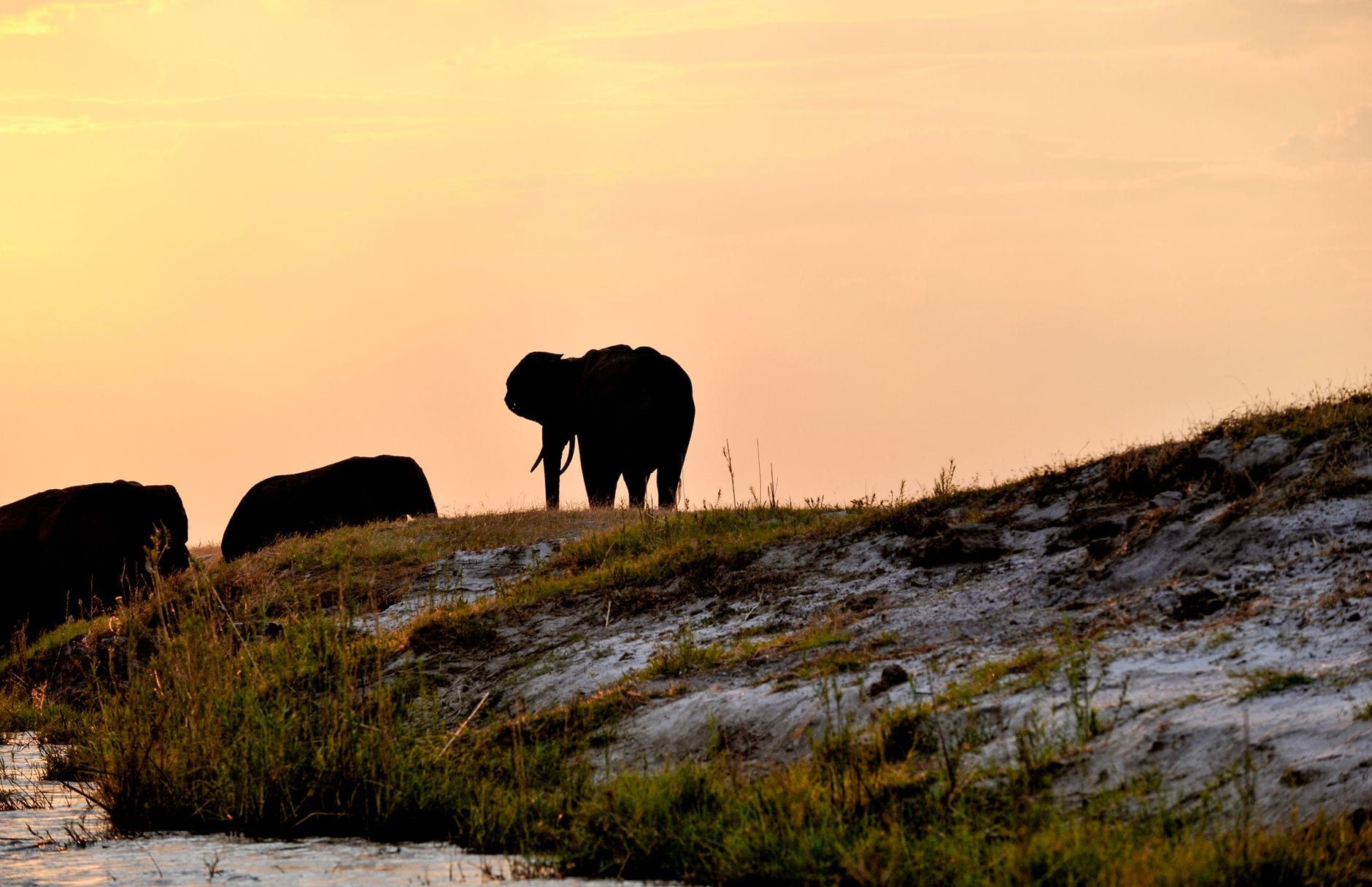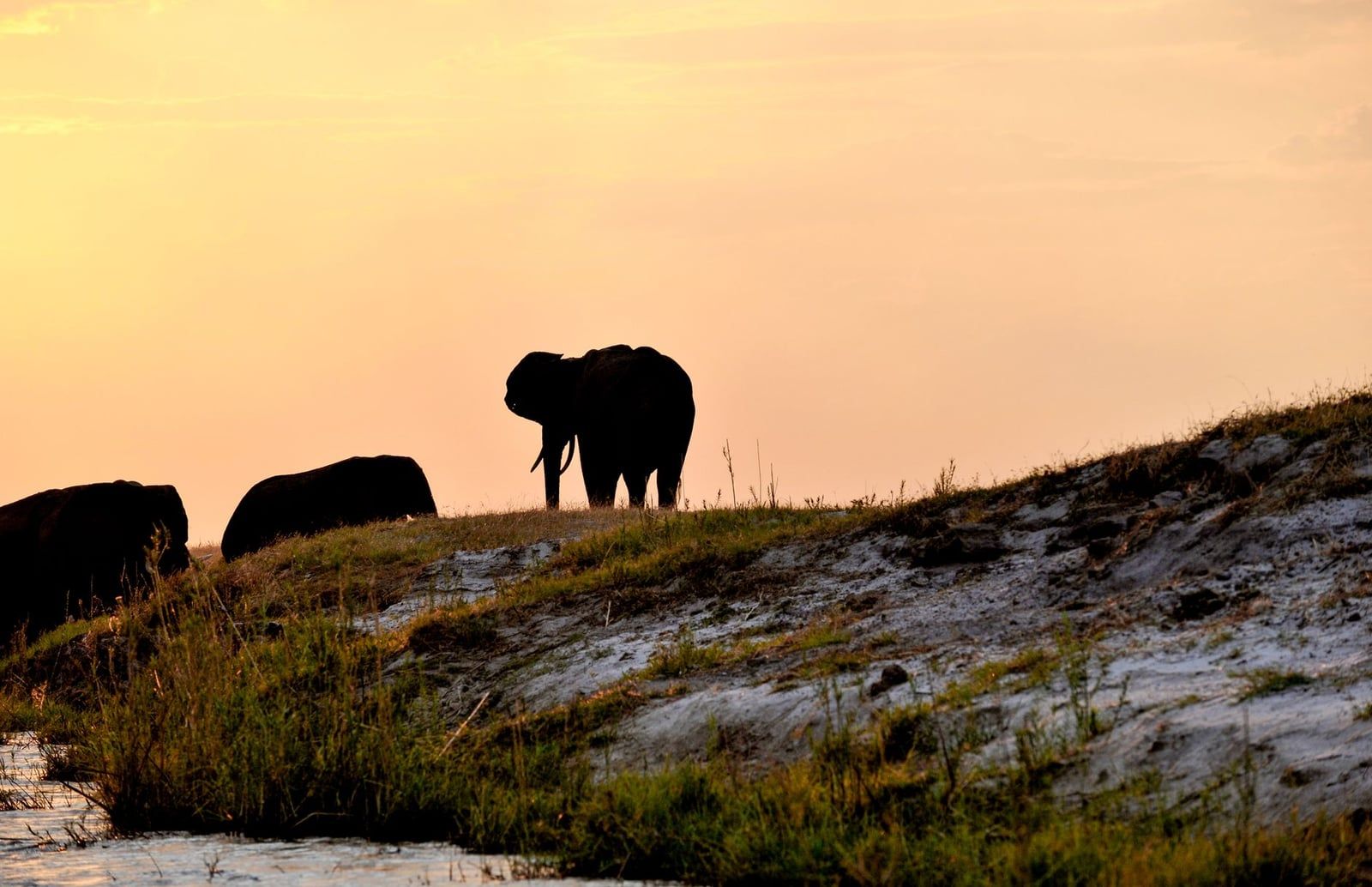
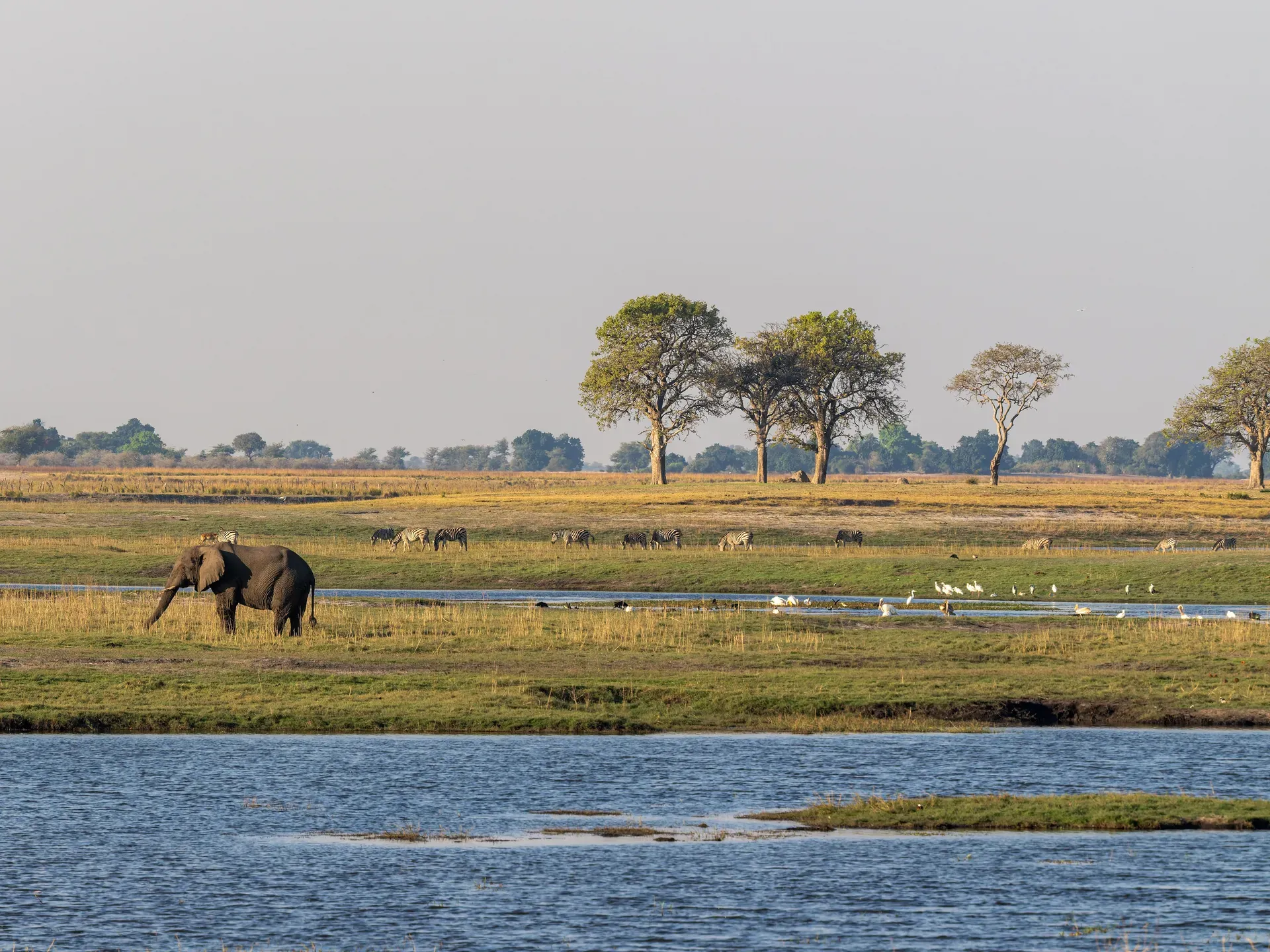
Elephants are the reason most people book a Chobe safari, and no other park on Earth delivers them in such density. An estimated 50,000–70,000 live in and around Chobe National Park, and in the late dry season herds numbering in the hundreds crowd the river at dusk, drinking, dust-bathing and swimming between the banks with trunks raised like snorkels.
What sets Chobe apart from every other flagship park is the water. The Chobe River forms the park's northern boundary with Namibia, so a safari here runs on two tracks at once: dawn game drives in open 4x4s, and afternoon boat cruises that put you at eye level with hippos, crocodiles and swimming elephants. Botswana's first national park, proclaimed in 1967–68, covers 11,700 km² of the country's northeast and holds more than 450 bird species alongside buffalo super-herds and a healthy predator population. This guide walks through the regions, the activities, the seasons, the real costs and the logistics, so you can book with a clear picture of what you're getting.
What Makes a Chobe Safari Different
Chobe works for almost every safari traveller because the river does half the work. In most parks you watch animals come to water from a vehicle on shore; here you can be floating on the water when they arrive, close enough to hear an elephant pull up river weed. That single difference makes Chobe one of the best boat-based game viewing venues anywhere, and it's the reason the park suits first-timers so well — sightings are frequent, close and varied without demanding luck or long drives.
It also scales across budgets. Kasane, the gateway town 8 km from the main gate, hosts everything from campsites to riverfront lodges, while fly-in camps in the remote interior serve the top end of the market. Photographers get stable, water-level platforms and huge subject density; families get short 3-hour activities and free entry for under-8s. Botswana as a whole counted 131,909 elephants in the 2022 KAZA Elephant Survey — the largest national herd in the region — and Chobe is where that herd is thickest. If you're comparing Chobe safari tours before committing, the choices further down this page will narrow the field fast.
Chobe's Four Safari Regions — and Which to Choose
Chobe sits in northern Botswana where the country meets Namibia, Zimbabwe and Zambia, and it forms part of KAZA — the Kavango–Zambezi Transfrontier Conservation Area spanning five countries, the largest of its kind in the world. The park divides into four distinct regions, and choosing between them is the single biggest planning decision you'll make: the busy, wildlife-dense riverfront near Kasane, or the quieter and harder-to-reach interior.
The Chobe Riverfront (Serondela)
The northeast corner is where almost every first-time visitor goes, and with reason. Lush floodplains along the Chobe River hold the highest wildlife density in the park, cruise boats depart from Kasane just minutes away, and the game-drive loop from Sedudu Gate is the most accessible road network in Botswana. The trade-off is company: this is the park's busiest zone, especially July–October. Almost every day trip from Victoria Falls lands here too.
Savuti and the Marsh
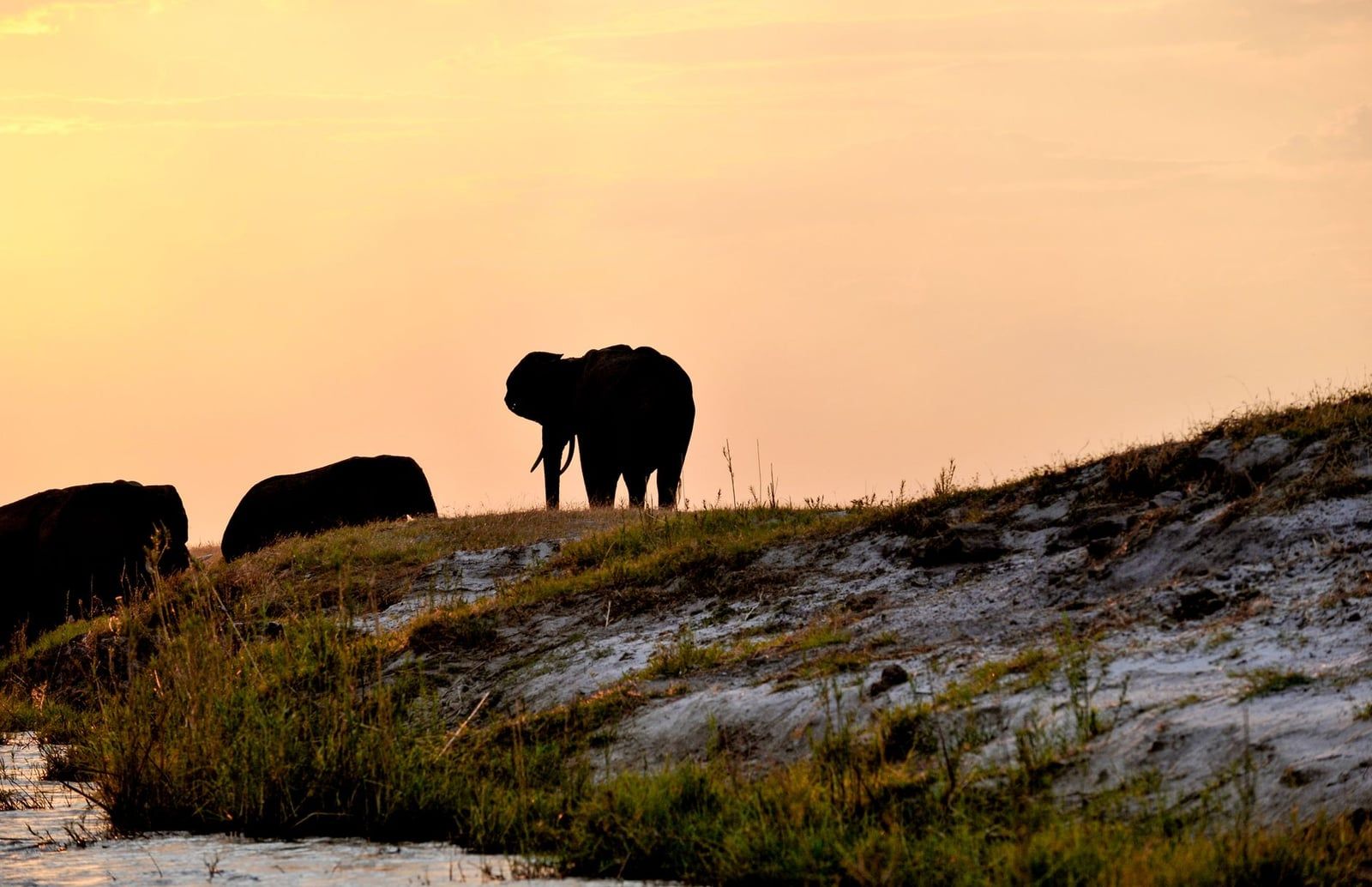
Out west, Savuti is predator country — Botswana's lion prides here are famous for hunting buffalo and even young elephant, and hyena clans rival them. The Savuti Channel, a roughly 100 km watercourse that drops only 18 m along its length, has switched on and off across two centuries: it flowed in Livingstone's time, dried by 1880, ran again from 1957, shut off in 1981, and returned around 2010, restoring the marsh. Getting there is a commitment — about 195 km and 5–6 hours of deep sand from Kasane in the dry season — so Savuti rewards 2–3 full days rather than a quick loop.
Linyanti
The northwest wetlands combine swamp, riverine forest and open floodplain, with strong dry-season concentrations of elephant, red lechwe and predators — including wild dogs along the Linyanti corridor. Most of the surrounding land is private concession, reached by light aircraft or deep-sand 4x4 tracks. That exclusivity is the point: you pay more, and share sightings with a handful of vehicles instead of a dozen.
Nogatsaa and the Ngwezumba Pans
The hot, mopane-and-grassland interior between the riverfront and Savuti is the park's least-visited quarter. Buffalo and elephant breeding herds move between the clay pans, and you can drive half a day without passing another vehicle. Choose it only if you have 4x4 experience or a fly-in itinerary; there's little infrastructure and no lodge circuit to fall back on.
Game Drives vs River Cruises — and Why You Need Both
A Chobe safari runs on two activities, and they complement each other so neatly that skipping either one leaves a gap. Here's how the two compare.
| Game drive | River cruise | |
|---|---|---|
| Duration | 3–4 hours, dawn or late afternoon | 2–3 hours, morning or sunset |
| Price | Roughly $40–80 per person shared | Roughly $40–70 per person shared |
| Vehicle | Open 4x4 on riverfront roads and mopane woodland | Flat-bottomed boat along the river boundary |
| Best for | Lions, leopards, giraffe, zebra, woodland species | Hippos, crocodiles, fish eagles, swimming elephants |
| Photography | Elevated, stable, wide coverage | Water level, low angle, close to riverbank game |
Game drives
Drives run about 3–4 hours in open 4x4s, priced around $40–80 per person for a shared vehicle (a scheduled 3-hour drive from Kasane costs BWP 498 per person). The riverfront loop from Sedudu Gate is the classic route; longer trips push into the mopane woodland behind the floodplain. Morning drives from roughly 05:30–09:30 catch predators while they're still active; afternoon drives from 15:30–18:30 end as the light goes flat and gold. A private vehicle for your group costs $250–450 per day — worth it for photographers who want to linger.
River cruises
The cruise is Chobe's signature. For 2–3 hours you drift along the park's northern boundary at water level, past hippos, crocodiles, buffalo on the shoreline and fish eagles perched in the dead trees. The sight the boats are famous for: elephants swimming between the banks, trunks up. From August to November, carmine bee-eater colonies nest in the riverbank cliffs and are visible only from the water. Shared cruises cost about $40–70 per person; a private boat charter runs $350–600 for the day. Photographers should note the trade — the boat gives you a stable, low platform the vehicle can't, while the vehicle covers far more ground and a higher angle. A 100–400mm zoom handles both.
What you'll actually see
Be realistic and you won't be disappointed. Hippos appear on 95–99% of cruises and crocodiles on 90–95%; elephants are close to guaranteed in the dry season. On game drives, operators report lions on 60–80% of multi-day trips and leopards on 25–40%. Those are odds, not promises — but stacked across two drives and two cruises, they're the best odds in Botswana. Which is the verdict: book a minimum of two drives and two cruises, ideally structured as a morning drive and an afternoon cruise on consecutive days.
One perfect Chobe safari day
The rhythm that works, hour by hour:
- 05:30 — gate opening and first light; predators are still hunting
- 09:30 — back for brunch, then a siesta through the dead heat of midday
- 15:00 — board the boat as game starts moving back toward the river
- 18:30 — sundowners on the water as elephant herds come down to drink
- 19:00 — gates close; dinner at the lodge, in bed early, repeat tomorrow
Beyond Drives and Boats: Night Drives, Walks & Other Experiences
One rule governs everything else you can do: night drives and guided bush walks are not permitted inside the national park itself. They run only in the private concessions that border it — Linyanti, Kwando and Selinda — where off-road driving and spotlighting are allowed. If a walking safari or a night drive is high on your list, you'll need to add a concession stay to your itinerary, which usually means fly-in rates and a bigger budget. For many first-timers, the park's drives and cruises are enough; for return visitors, the concessions are the upgrade.
The rest of the extras are simpler to slot in. Specialist photographic boats with mounts and rotating seats serve serious photographers on the river. Tiger fishing is seasonal; cultural village visits run from Kasane; houseboats offer overnight stays on the river itself; and scenic helicopter flights lift you over the floodplains and the quad-border region where four countries meet.
The Wildlife You'll See on a Chobe Safari
Chobe's game list reads like a highlight reel of southern Africa, and a couple of well-placed days will clear most of it. Here's what to expect, species by species, and where the honest caveats sit.
Elephants and buffalo
From August to October, the riverfront is the show. Hundreds of elephants a day come down to drink, bathe and cross, and buffalo herds — sometimes over 1,000 strong — follow the same water. Single elephant herds of 60 or more routinely cross the sandy track within metres of vehicles. Nothing in Africa prepares you for the scale of it; you stop counting.
Predators
Lion prides are the riverfront's steady performers, but Savuti is where Botswana's predator reputation was built — large prides there specialise in buffalo, and some have been recorded taking young elephant. Leopards and cheetah are present throughout, and the Linyanti corridor is one of southern Africa's best areas for wild dogs. Hyenas are everywhere after dark, especially around Savuti's campsites.
The Big Five reality check
Chobe hosts four of the Big Five — lion, leopard, elephant and buffalo. Rhino exist only in closely protected reintroduction areas, and sightings are rare. Don't plan your trip around completing the set here; plan around elephants and the river, and treat any rhino as a bonus. Our full Chobe animals guide covers the rest of the list in detail.
Antelope, plains game and birds
Impala, giraffe, zebra, sable and roan all appear on drives, and the park is a stronghold of the puku — a stocky, orange-coated marsh antelope that's hard to find anywhere else in the region. Birders get more than 450 recorded species: African skimmers sweeping the river surface, fish eagles, and carmine bee-eaters flashing through the riverbank cliffs from August to November. Migrants from Europe and Asia swell the count from November to April.
When to Go: Dry Season vs Green Season
Chobe is a year-round park, but the two halves of the year deliver different trips. The dry season wins on game density; the green season wins on birds, newborn animals and price. Pick by what matters most to you.
Dry season (May–October)
This is the default answer, and it's correct. As waterholes inland dry up, game concentrates along the permanent Chobe River, vegetation thins, and July–October delivers the peak elephant-and-buffalo spectacle. Weather swings hard across the season: June and July nights drop to 6–8 °C — near freezing on open vehicles at dawn — while October afternoons push past 35 °C, sometimes past 40 °C. May to August is the most comfortable window, with afternoons around 27–29 °C and the fewest mosquitoes in July and August.
Green season (November–March)
Rains arrive from November and game disperses inland, so sightings thin out — some Savuti and Linyanti roads turn muddy or close entirely. What you get in exchange: the year's best birding as migrants arrive, impala lambing and newborn game everywhere, dramatic skies for photography, and the lowest rates and thinnest crowds of the year. For birders, photographers on a budget and repeat visitors, it's a genuinely good trade.
The zebra migration
Around November, up to 30,000 zebra leave the Savuti area and move south toward the Makgadikgadi Pans, returning north in March–April. It's one of Africa's longest terrestrial mammal migrations, and if you want to catch it, your window is the early green season in Savuti — not the riverfront. Our month-by-month guide to visiting Chobe breaks the whole year down.
Two practical notes on timing. First, crowds: the riverfront is busy July–October, so enter at gate opening and use a good guide who works around the vehicle clusters rather than into them. Second, lead times — peak-season lodges typically need 9–12 months' advance booking; 4–6 months suffices in the shoulder and green seasons, and even the unfenced public campsites fill months out.
What a Chobe Safari Costs — Fees, Tiers & What Quotes Include
Start with the entry fee, because it's where the internet will mislead you. Two schedules exist. The long-standing rate — still the one most likely to apply — charges international adults BWP 120 (~US$11) per person per day. A revised 2026 schedule gazetted for 1 April 2026 would raise that to BWP 270 (~US$20), but on 31 March 2026 the Ministry of Environment and Tourism postponed the rollout — postponed, not cancelled. Many ranking sites still quote one number or the other as settled fact. Confirm the applicable rate at Sedudu Gate or the Department of Wildlife offices in Maun before you travel, and note that fees are charged per person per day including your departure day, with re-entry requiring a new daily fee.
| Visitor / item | Long-standing rate | Gazetted 2026 rate |
|---|---|---|
| International adult | BWP 120 (~US$11) | BWP 270 (~US$20) |
| Child 8–17 | BWP 60 | BWP 135 |
| Under 8 | Free | Free |
| SADC residents | — | BWP 205 |
| Botswana citizens | BWP 10 | BWP 30 |
| Foreign-registered vehicle | BWP 50 per day | BWP 115 per day |
Cash matters here: card machines at the gates frequently fail and there are no ATMs inside the park, so withdraw pula in Kasane before heading in. Keep every receipt for the length of your stay. Full details are on our Chobe hours and entry fees page, including gate opening times (06:00–18:30 April–September, 05:30–19:00 October–March).
Beyond the gate fee, the cost ladder is broad. Full-day trips from Victoria Falls that pair a morning game drive with an afternoon river cruise sell for roughly $170–200 per person, while guided day trips from Kasane — including hotel pickup, cruise, drive, lunch and park fees — start around $130–180. Budget camping safaris with shared activities run $100–150 per person per day, with published 3-day camping packages from about $720. At the top end, per-person per-night tiers run $700–900 for 4-star comfort, $1,250–1,450 for 4-star luxury and $2,000–3,500 for 5-star camps including accommodation and transfers; premium trips reach $5,500 and beyond.
When you compare quotes, check line by line what's actually included:
- Park entry fees for every day, including departure day
- All game drives and river cruises, with the count of each
- Transfers between Kasane, the airport, camps and borders
- Meals, drinks and laundry where relevant
- Concession or camp levies at fly-in properties
How Long to Stay, Where to Stay & Getting There
Three questions close out the planning: how many nights, which bed, and how you physically get here. All three have short answers.
How many nights
Two to three nights is the sensible minimum — enough for two morning drives and two afternoon cruises without rushing. Three to five nights is the sweet spot for first-timers who want to add Savuti or Linyanti to the riverfront, remembering that the Kasane–Savuti transfer alone eats 5–6 hours of deep-sand driving. Day-trippers get a real taste, but the best river light, at dawn and dusk, belongs to people sleeping nearby.
Where to stay
Kasane lodges are the value-and-flexibility play: you're minutes from Sedudu Gate, activities book per seat, and prices span camping to comfortable riverside rooms. Inside the park itself, Chobe Game Lodge is the only permanent lodge, and its guests get roughly an hour's head start on the day-trip crowds at dawn. Fly-in camps at Savuti and Linyanti buy exclusivity at fly-in prices. Two options sit apart: the unfenced Ihaha riverside campsite (USD 50 a night for international visitors), where elephant herds walk between the tents and the water, and overnight houseboats on the river. The full range is covered in our Chobe accommodation guide.
Getting there
Kasane International Airport is 10 km from Sedudu Gate, under 10 minutes' drive, with nonstop flights from Johannesburg in 1 hour 40 minutes and Kenya Airways service from Nairobi four times a week. Most lodges run airport transfers. From Maun, gateway to the Okavango Delta, it's about 600 km — 8–10 hours by road via Nata, or a short charter flight. Overlanders from Namibia's Zambezi Region enter at Ngoma Gate on the western riverfront. Our transport and routes guide covers the detail, including self-drive requirements.
Pairing Chobe with Victoria Falls and beyond
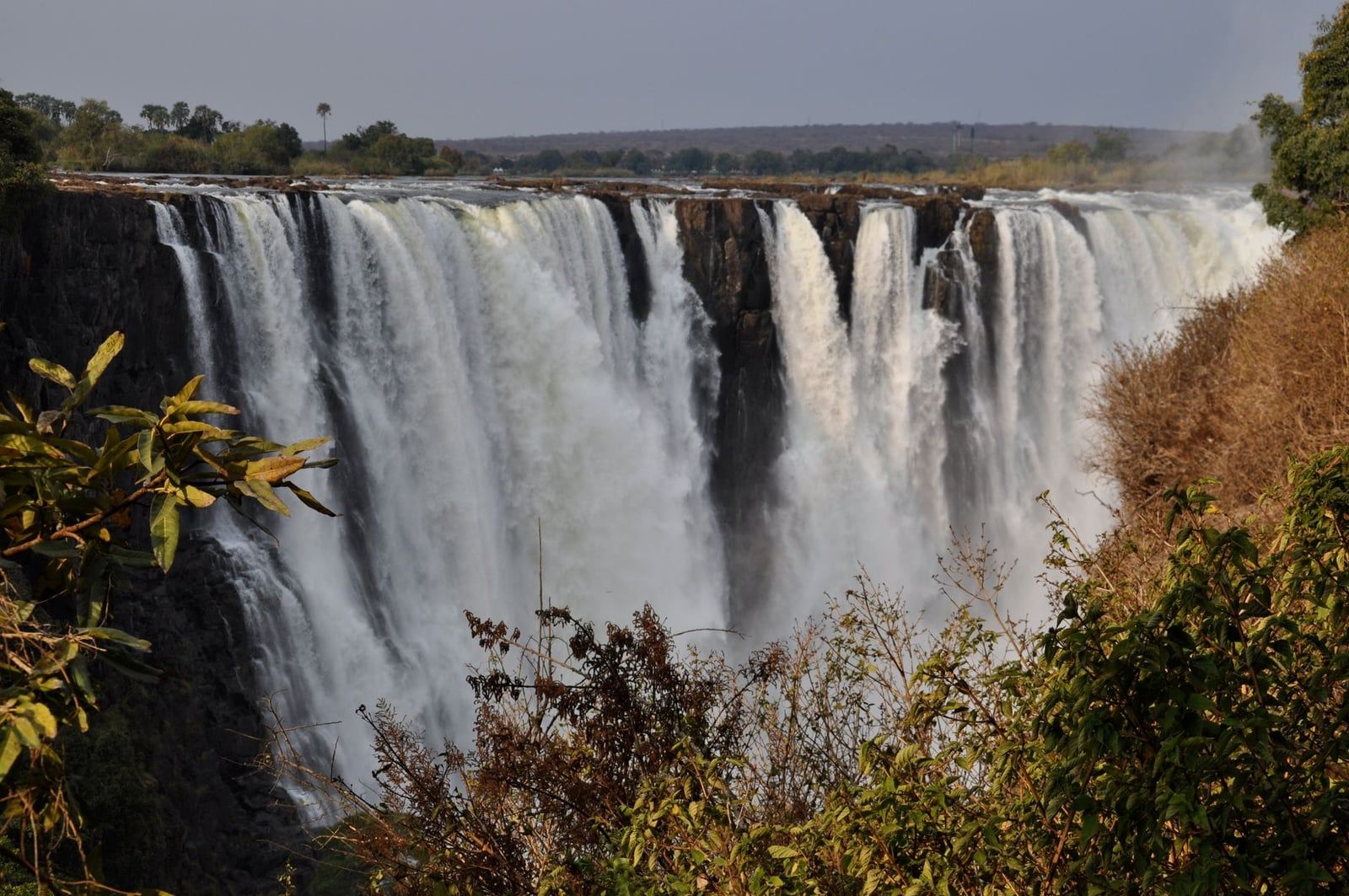
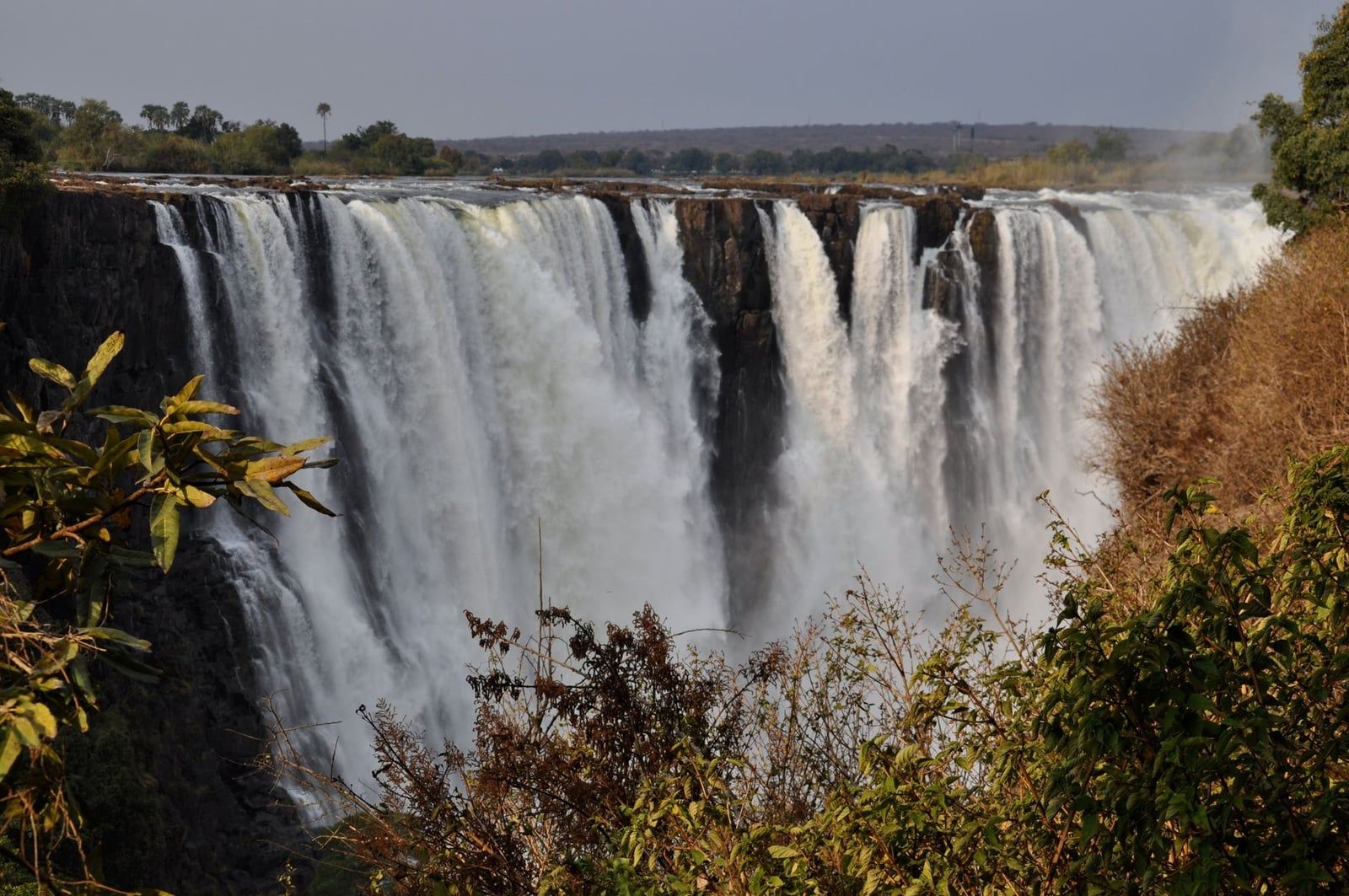
Yes, you can do Chobe from Victoria Falls — it's about 80 km, roughly an hour's drive plus border formalities at Kazungula, or 20–30 minutes by charter flight. The two pair so well that many travellers string them together, and the Chobe tours from Victoria Falls make it a one-decision booking. May and June is the overlap window when the falls are near peak flow and Chobe's dry season is already producing — the best single fortnight for both. For a longer Botswana circuit, add the Okavango Delta and Moremi via Maun: the classic pairing, with Chobe for elephants and the delta for mokoro glides and floodplain game.
Health, Packing & Practical Prep
Chobe is not malaria-free — it's a CDC-listed transmission zone, with risk highest roughly November to June. Take antimalarial medication as prescribed, use repellent with at least 30% DEET, and cover arms and legs at dawn and dusk. If a fever hits during or after the trip, get medical help immediately. That's the whole protocol, and it shouldn't put anyone off; it's standard practice for most of safari Africa.
Pack for temperature swings, not averages. A June dawn on an open vehicle runs 6–8 °C before the afternoon climbs to 27 °C; October afternoons exceed 35 °C. Neutral khaki or olive layers, a fleece and beanie for early drives, a wide-brimmed hat, and a rain shell if you're coming November–March. Bring binoculars — they're essential on the river — and if you're flying into a bush camp, the standard limit is 20 kg in soft bags.
Conduct is enforced, not advisory. Stay in the vehicle except at designated picnic sites, keep 10 m from elephants and never block their path to the river, hold 300–500 m between vehicles at sightings, and observe the 40 km/h limit. On-the-spot fines run BWP 500–5,000. Two absolute rules: never swim in the Chobe River — it holds large populations of Nile crocodiles and hippos — and don't fly a drone anywhere in the park without a written DWNP permit, which is rarely issued.
Families are well catered for. Children are usually permitted on game drives, though lodges commonly set minimum ages of 6 or 12; a private vehicle is the standard workaround for younger kids. Boat cruises suit children particularly well — hippos, crocodiles and elephants at eye level hold attention better than a 4-hour drive. One border detail to know: Botswana immigration reportedly requires an unabridged birth certificate for travellers under 18.
Frequently asked questions
How many days do you need for a Chobe safari?
Two to three nights minimum — enough for the two-drives-plus-two-cruises structure. Three to five nights lets you add Savuti or Linyanti to the riverfront, which is the sweet spot for a first safari.
What is Chobe National Park famous for?
The largest elephant concentration on Earth — an estimated 50,000–70,000 in and around the park — plus some of the best boat-based game viewing in Africa on the Chobe River and easy access from Kasane and Victoria Falls.
When is the best time for a Chobe safari?
The dry season, May–October, peaking July–October when elephant and buffalo herds crowd the river. The green season (November–March) trades game density for 450+ bird species, newborn animals and the lowest rates.
How much does a Chobe safari cost?
Day trips from Victoria Falls run roughly $170–200; camping safaris $100–150 per person per day, with 3-day trips from about $720; lodge tiers from $700–900 per night up to $2,000–3,500 at 5-star camps. Add park entry of BWP 120 (~US$11) per international adult per day under the long-standing rate.
Can you see the Big Five in Chobe?
Four of the Big Five are well established: lion, leopard, elephant and buffalo. Rhino exist only in closely protected reintroduction areas — sightings are rare and shouldn't be planned around.
Can you do Chobe as a day trip from Victoria Falls?
Yes. Victoria Falls is about 80 km away, roughly an hour by road plus border formalities at Kazungula, or 20–30 minutes by charter. Full-day trips pairing a morning game drive with an afternoon river cruise cost roughly $170–200 per person.
Is Chobe malaria-free?
No. Chobe is a CDC-listed malaria transmission zone. Take prophylaxis as prescribed, use 30%+ DEET repellent, and cover up at dawn and dusk; risk is highest roughly November to June.
Chobe or Kruger — which is better for a safari?
Choose Chobe for elephants, river safaris and easy Victoria Falls combinations; choose Kruger for big-cat density, greater species diversity and self-drive infrastructure.